Wabi-Sabi Entryway: Embracing Imperfect Beauty in Your Home’s First Impression
Hey there, design lovers! Today, I’m diving deep into the magical world of Wabi-Sabi entryway design – a style that’s about to transform your home’s first hello from boring to breathtakingly beautiful.
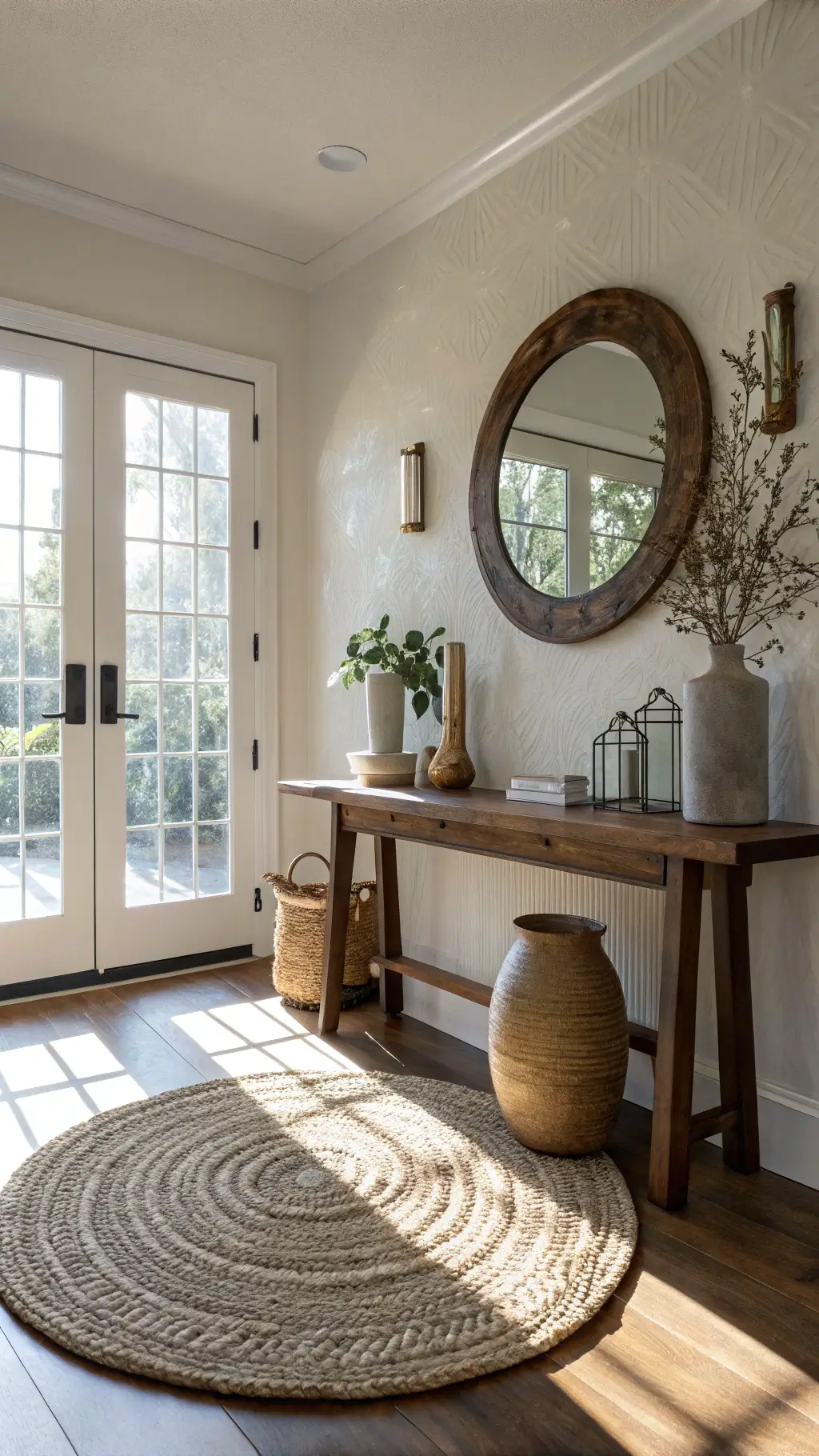
💡 Steal This Look
- Paint Color: Sherwin-Williams Accessible Beige SW 7036
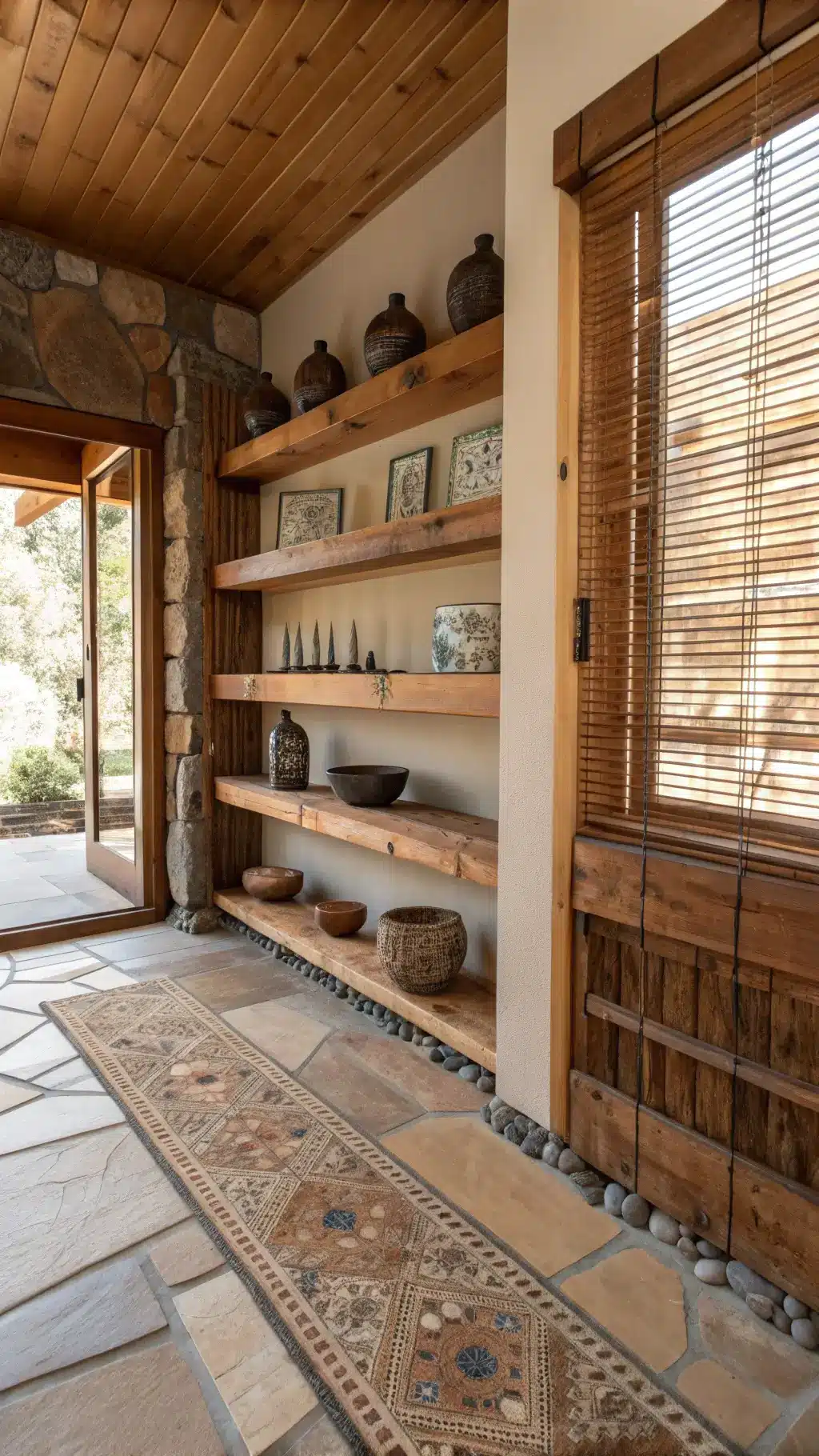
- Furniture: low-profile wooden bench with visible grain and natural imperfections, reclaimed wood console table with live edge, hand-thrown ceramic umbrella stand
- Lighting: paper lantern pendant or hand-formed ceramic wall sconce with warm dimmable glow
- Materials: unfinished linen, raw clay, weathered oak, hand-forged iron, unglazed pottery, natural jute
I once spent months hunting for the ‘perfect’ bench before realizing the wonky, hand-me-down stool from my grandmother held infinitely more soul—now it’s the first thing guests notice and comment on.
Why Wabi-Sabi? Because Perfection is Overrated!
Listen up. Your entryway isn’t just a passageway – it’s the first chapter of your home’s story. And Wabi-Sabi? It’s like the zen master of interior design that whispers, “Hey, those cracks and imperfections? They’re not mistakes. They’re beautiful.”
Quick Style Breakdown
- Time Investment: 2-4 hours (Netflix break included!)
- Budget: From thrifty to fancy-pants
- Skill Level: Total beginner to weekend warrior
- Vibe: Serene, natural, totally you
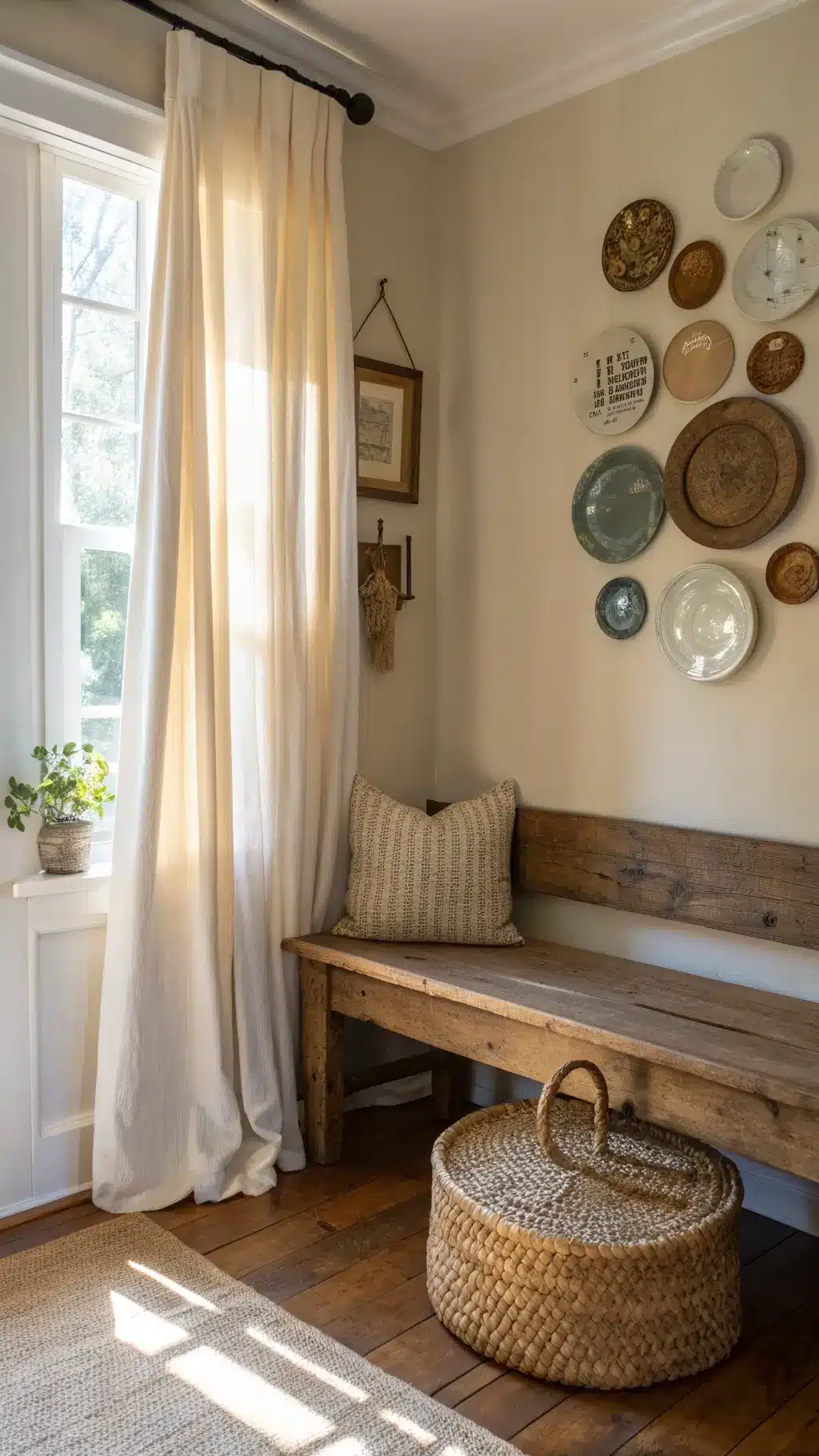
★ Steal This Look
- Paint Color: Benjamin Moore White Dove OC-17
- Furniture: weathered wood console table with visible grain and knots, simple low bench with natural linen cushion, hand-thrown ceramic umbrella stand
- Lighting: paper lantern pendant with warm LED bulb, small brass sconce with patina finish
- Materials: unfinished linen, raw edge wood, handmade ceramics, visible plaster texture, natural jute or sisal runner
I always tell clients that their entryway should feel like a deep breath after a long day, not a museum display. The beauty of Wabi-Sabi is that you can stop apologizing for that scuffed floor or uneven wall—it becomes the character that makes your home unmistakably yours.
The Must-Have Pieces for Your Wabi-Sabi Sanctuary
Hero Pieces That’ll Make Your Entryway Sing
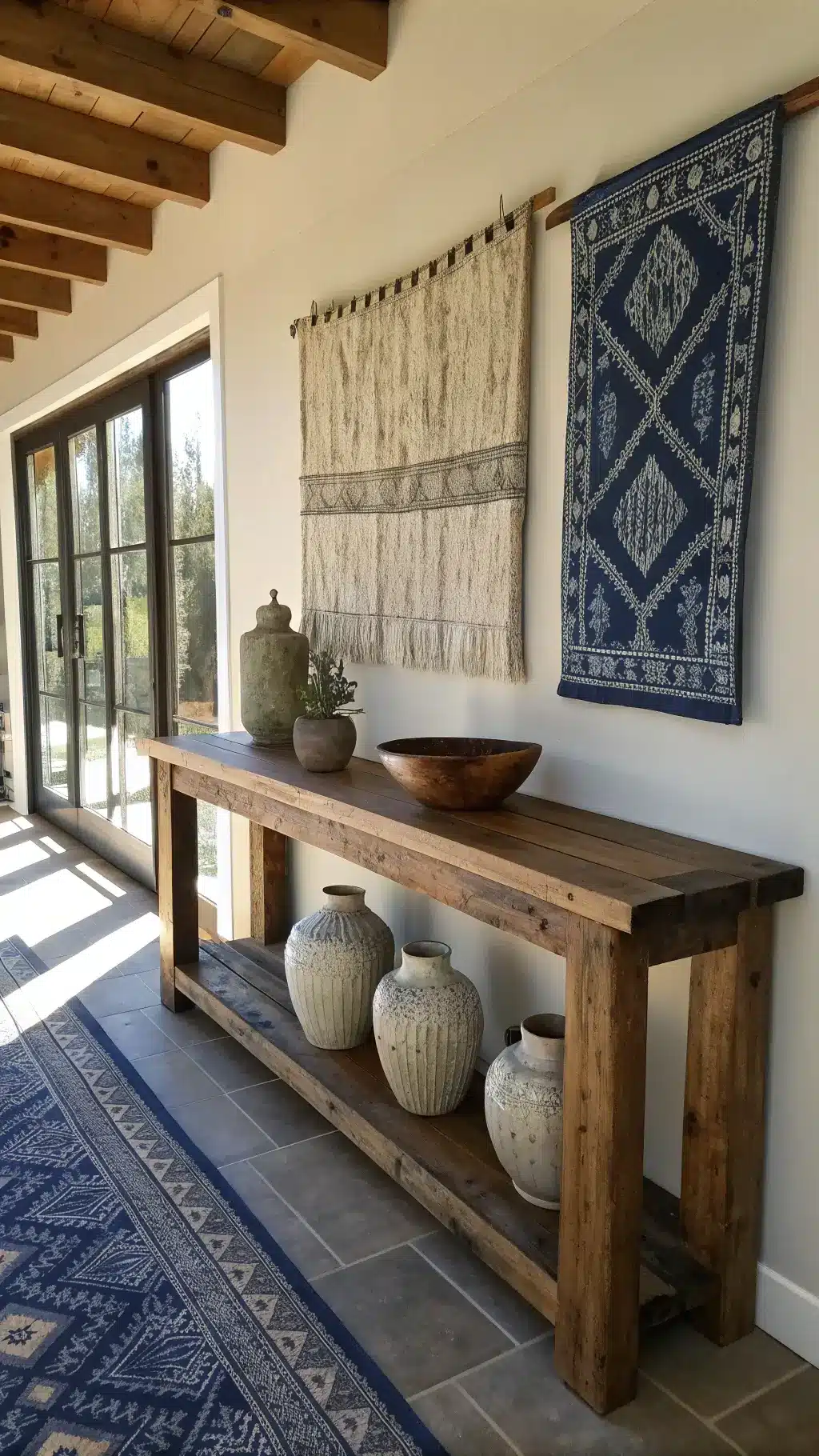
- Natural Wood Console Table
- Think raw, unfinished edges
- Celebrates wood’s natural character
- Rustic wooden console table
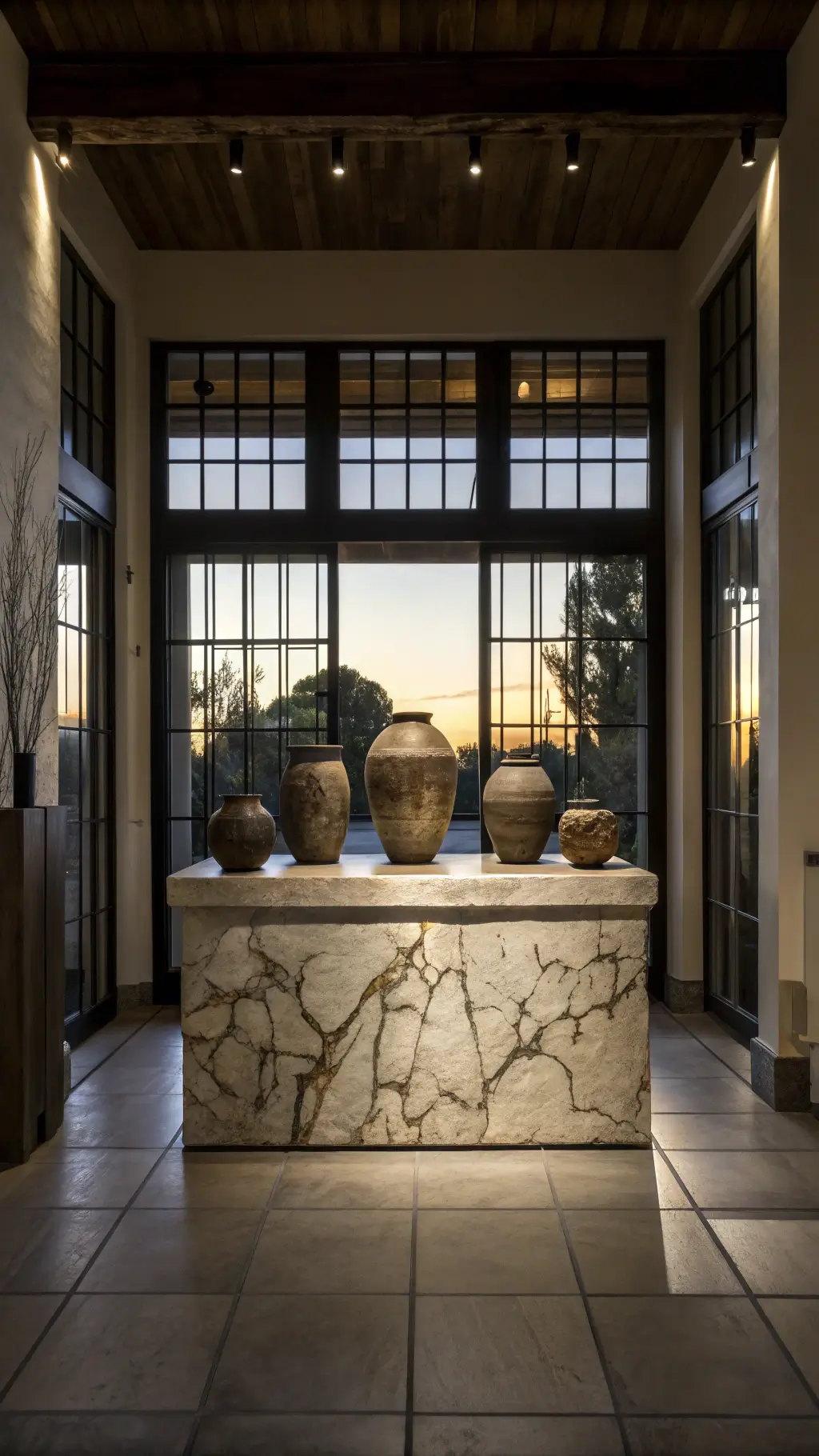
- Handcrafted Ceramic Magic
- Imperfect shapes? Absolutely perfect!
- Neutral tones that whisper, not scream
- Handmade ceramic vase
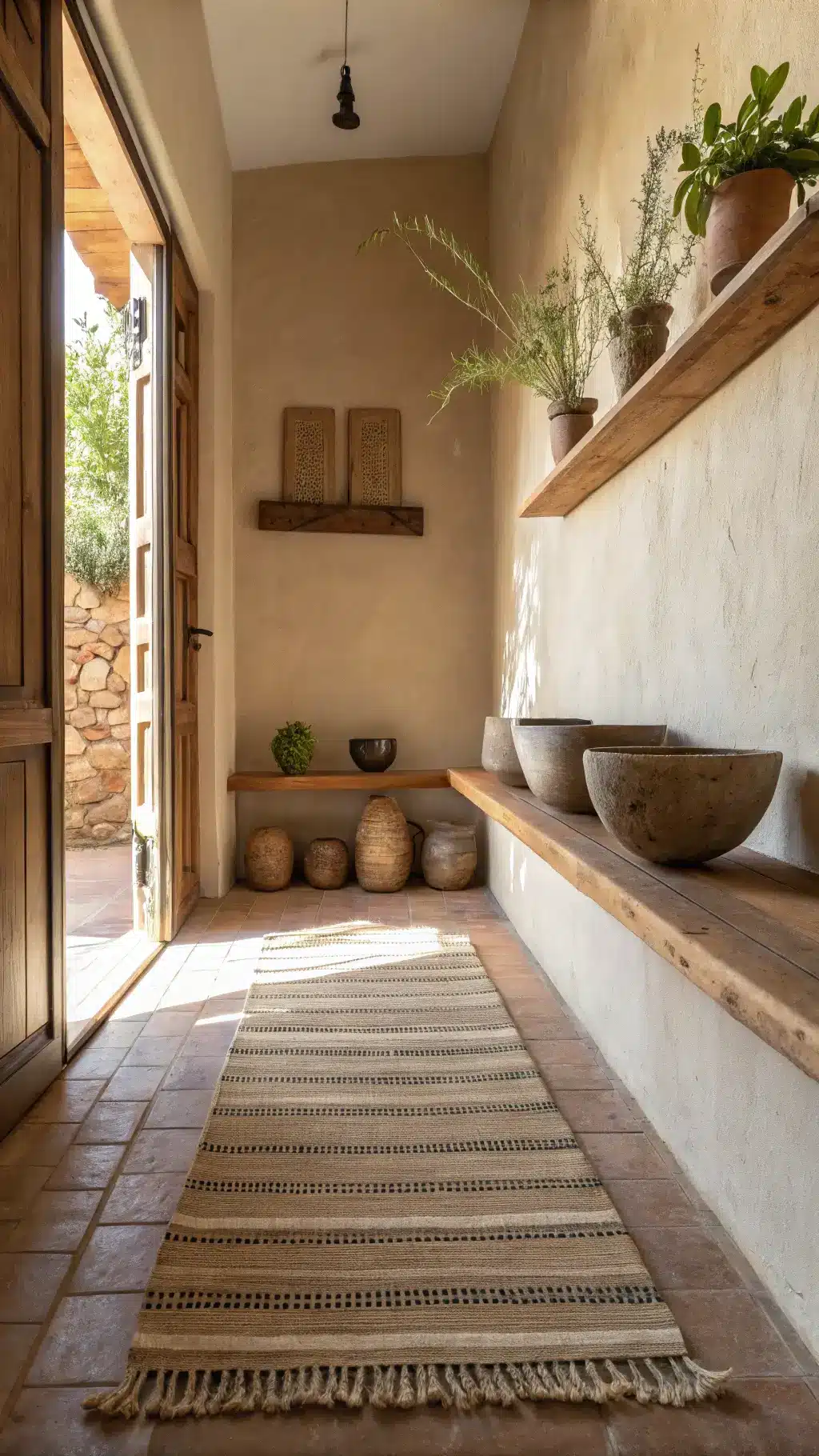
Styling Secrets That’ll Blow Your Mind
Texture is Your New Best Friend
- Layer natural materials like a pro
- Mix wood, stone, and soft textiles
- Linen throw pillows
Color Palette Wisdom
- Stick to earth tones
- Think soft greens, warm grays, creamy whites
- No loud colors allowed in this zen zone!
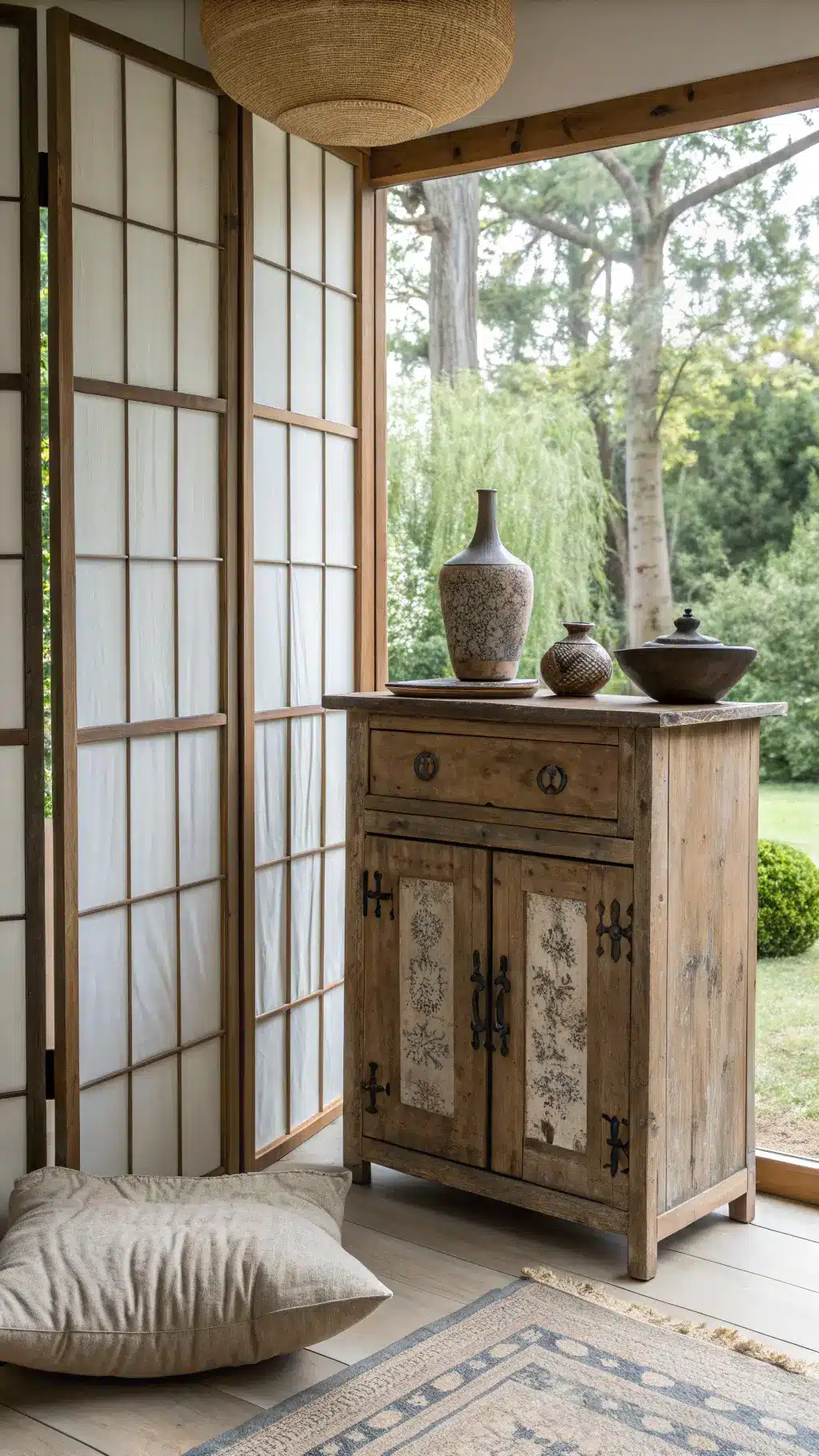
🏠 Steal This Look
- Paint Color: Farrow & Ball Drop Cloth No. 283
- Furniture: Live-edge acacia wood console table with natural bark edges and hairpin legs
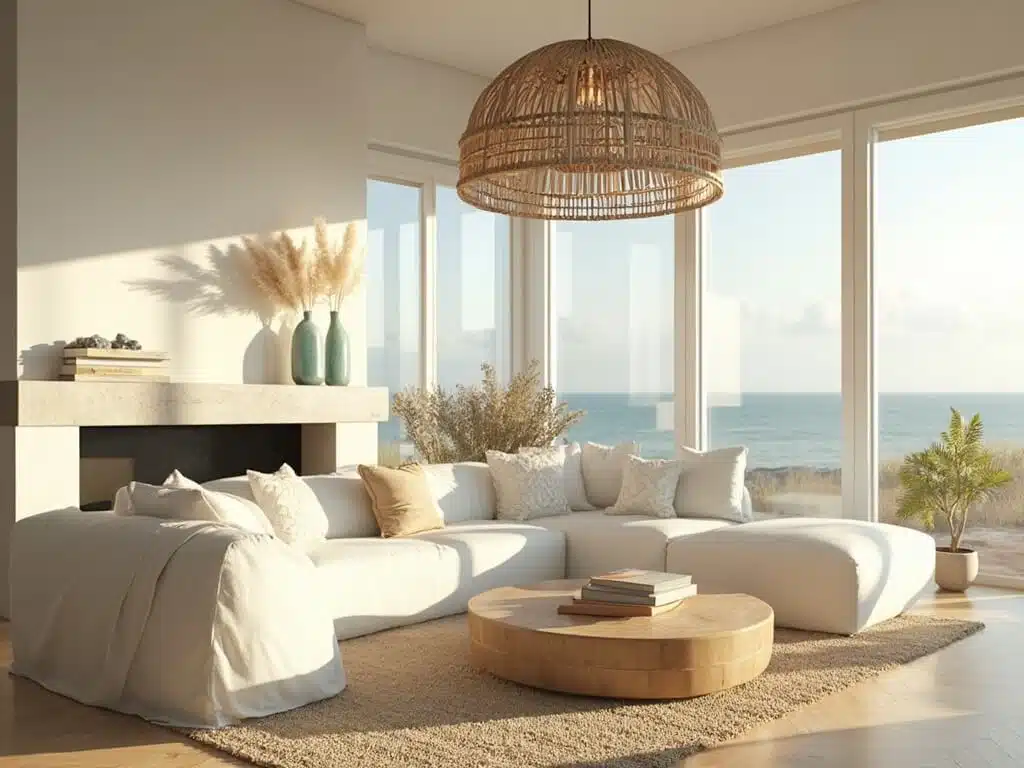
- Lighting: Woven rattan pendant with exposed Edison bulb and organic irregular weave
- Materials: Unfinished oak, hand-thrown stoneware, slubby Belgian linen, raw terracotta, aged brass
I always tell clients to run their hands along the console edge before buying—if you can’t feel the saw marks, the grain ridges, the slight wobble that says a human made this, keep searching. Your entryway should greet you like an old friend who’s been waiting.
The Ultimate Wabi-Sabi Entryway Setup Guide
Step-by-Step Magic
- Clear the Clutter
- Marie Kondo would be proud
- Keep only items that spark joy (and serenity)
- Place Your Anchor Piece
- Position that wooden console table
- Let it breathe, don’t overcrowd
- Add Natural Elements
- Dried branches
- Small potted plants
- Ceramic plant pot
Pro Tips That’ll Make You Look Like a Design Genius
- Lighting is Everything
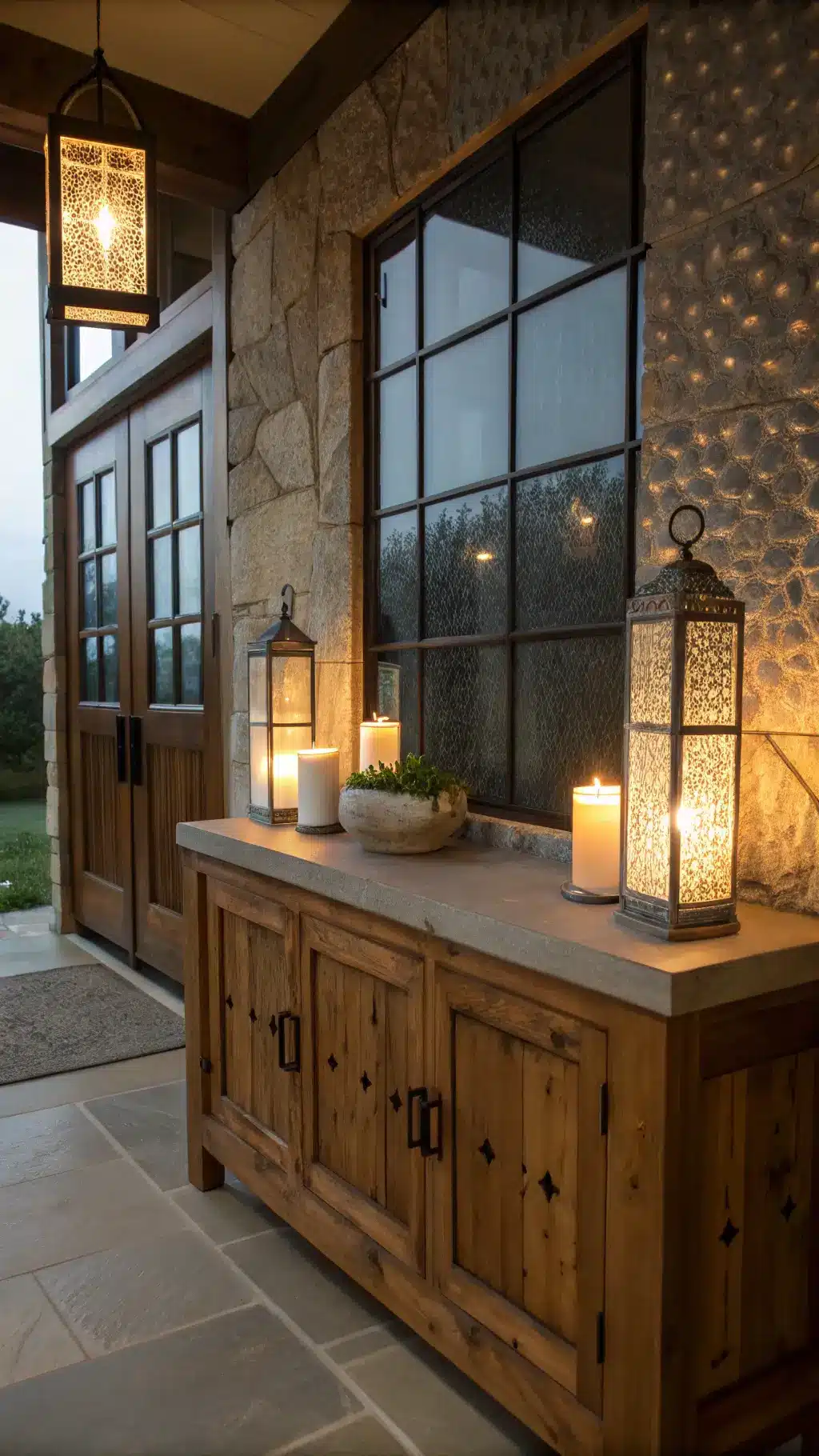
- Soft, warm light
- Avoid harsh overhead lighting
- Minimalist table lamp
- Less is More
- Embrace negative space
- Each piece should tell a story
💡 Steal This Look
- Paint Color: Behr Weathered Moss PPU10-18
- Furniture: Low-profile reclaimed wood console table with live edge, single drawer, tapered legs; small ceramic stool or meditation bench for shoe removal
- Lighting: Paper lantern pendant or rice paper table lamp with warm 2700K bulb, no overhead fixture
- Materials: Unfinished oak or walnut, handmade ceramic, raw linen, dried botanicals, visible wood grain, uneven textures
I once spent months hunting for the ‘right’ console before realizing my grandmother’s warped sideboard, water stains and all, was exactly what the space needed—the cracks are where the story lives.
Seasonal Refresh (Because Life Moves!)
Quick Seasonal Swaps
- Fall: Add dried pumpkins
- Winter: Incorporate pinecones
- Spring: Fresh botanical branches
💡 Steal This Look
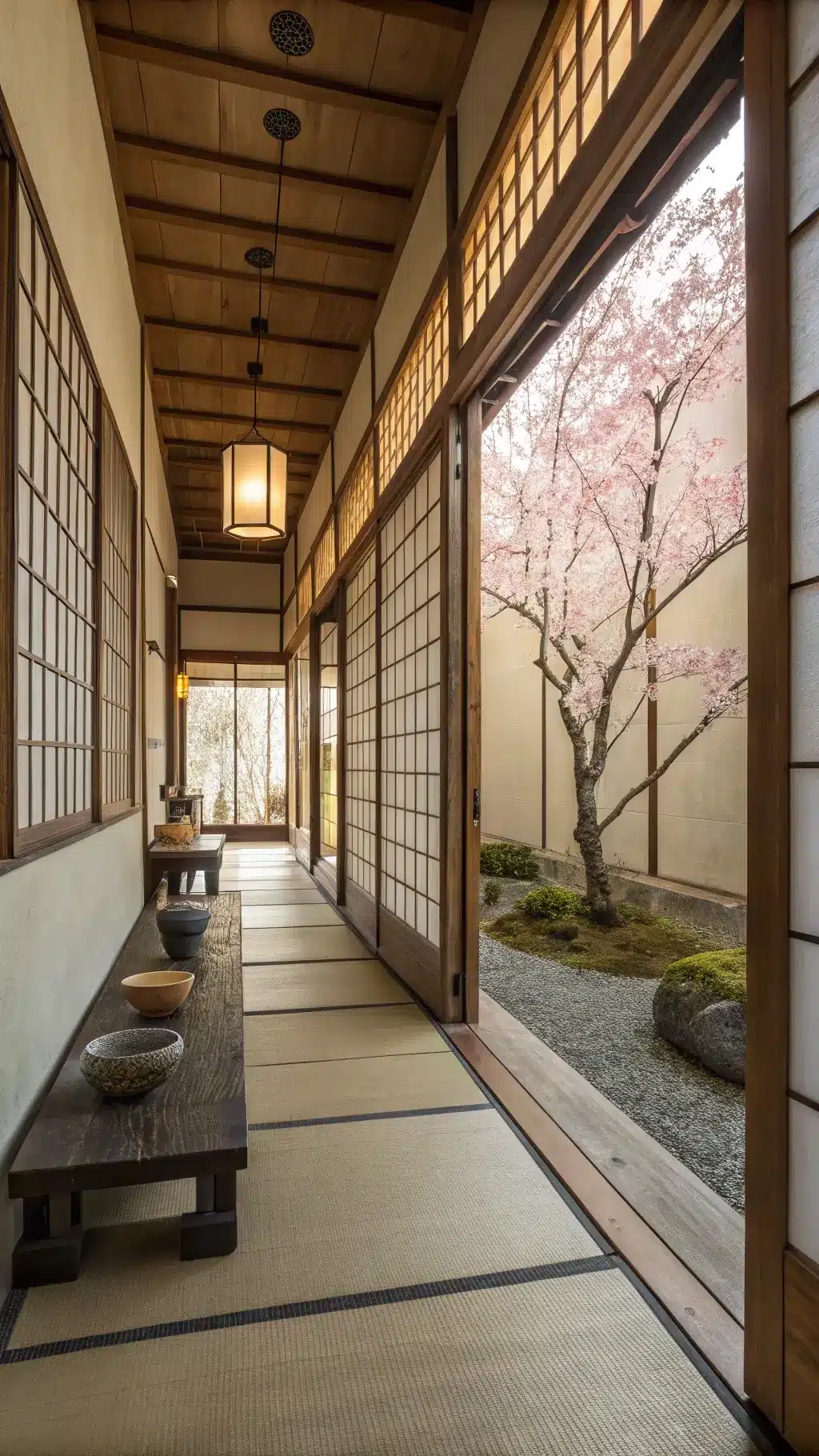
- Paint Color: Valspar Wabi-Sabi 5006-1B
- Furniture: low-profile wooden bench with visible grain and live edge details, handwoven rush or seagrass storage baskets tucked beneath
- Lighting: paper lantern pendant with irregular handmade texture or raw linen drum shade on aged brass chain
- Materials: unfinished oak, raw linen, unglazed ceramic, hand-thrown pottery, dried botanicals, rough-hewn stone
There’s something quietly profound about greeting each season at your threshold—I’ve found that a single branch of foraged bittersweet or a weathered pinecone collected on a winter walk carries more soul than any store-bought wreath ever could.
Final Thoughts: Your Perfectly Imperfect Space
Wabi-Sabi isn’t just a design style. It’s a life philosophy. Your entryway isn’t about looking perfect – it’s about feeling authentically you.
Quick Wins:
- Embrace imperfections
- Choose natural materials
- Let your space tell your story
Ready to transform your entryway? Let’s do this! 🌿