What Makes Art Deco So Special?
Art Deco exploded onto the scene during the roaring 1920s and 1930s, bringing a fresh mix of modernist precision and decorative extravagance that people had never seen before.
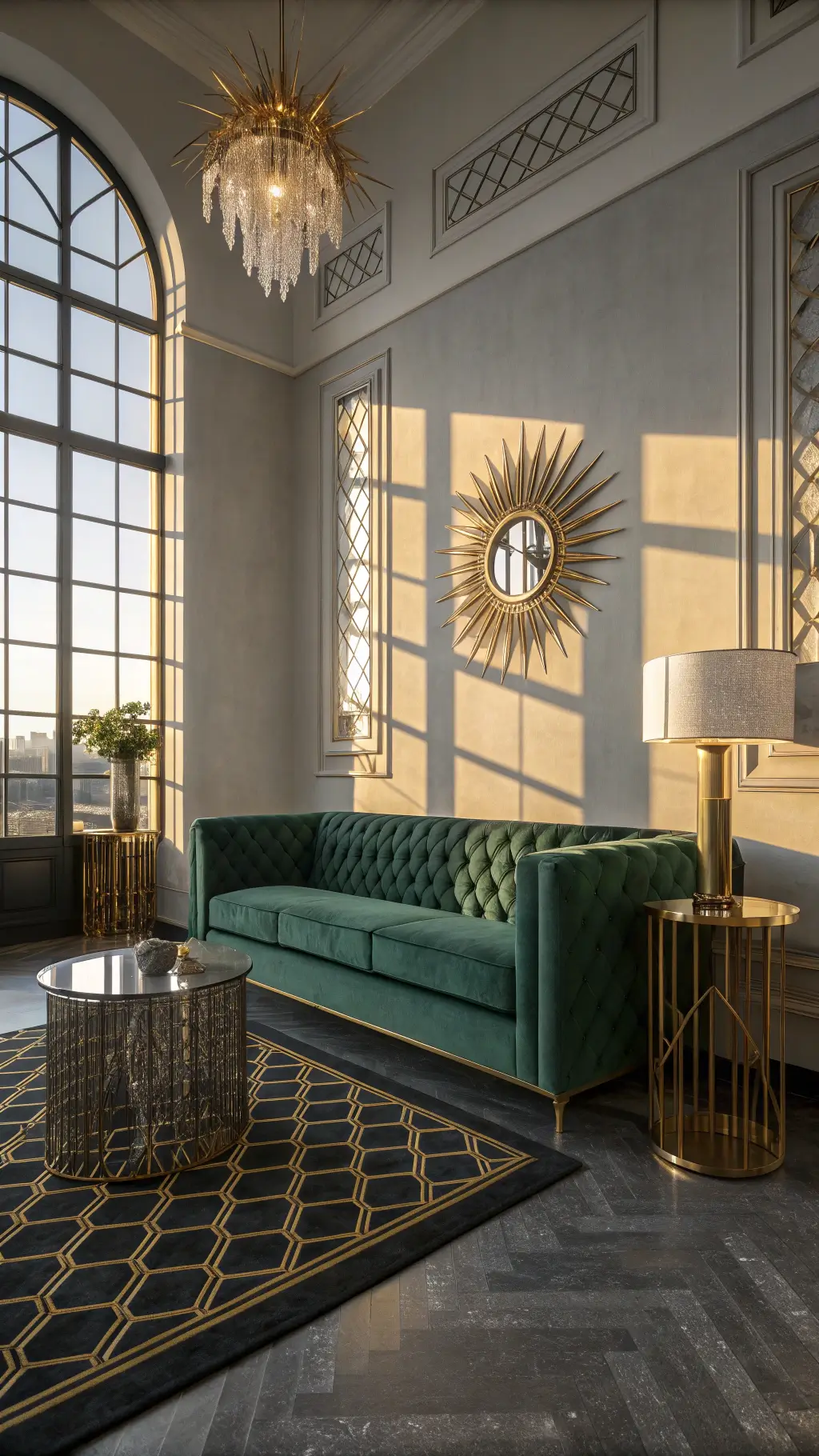
This style celebrates the machine age while pulling inspiration from ancient Egyptian motifs, African art, and the bold geometric shapes that defined early modernism. The result? Spaces that feel simultaneously sleek and ornate, minimalist yet maximalist.
Quick Stats for Your Art Deco Project:
- Timeline: 2-4 weeks for a complete room transformation (but you can definitely do it in stages)
- Budget range: Anywhere from $2,000 to $15,000+ depending on how ambitious you want to get
- Works best in: Living rooms, bedrooms, dining areas, and even luxurious bathrooms
- Skill level needed: Intermediate to advanced (you’ll need a good eye for pattern mixing and spatial planning)
- Year-round appeal: Absolutely—this style never goes out of season
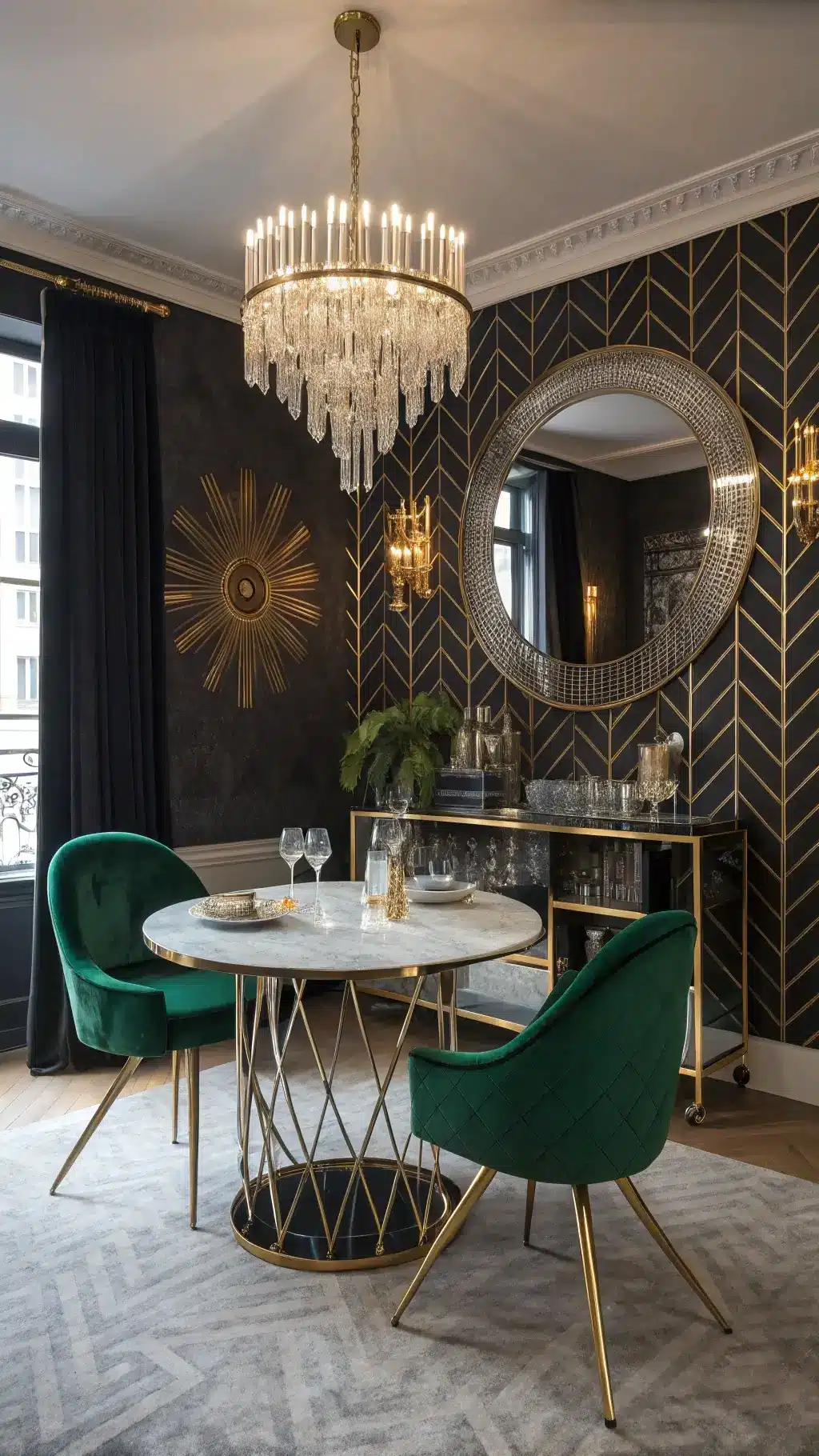
🎨 Steal This Look
- Paint Color: Sherwin-Williams Black Magic SW 6991
- Furniture: Streamlined lacquered sideboard with chrome geometric hardware, curved velvet channel-tufted sofa in deep emerald, sunburst mirror with gold leaf frame
- Lighting: Tiered glass chandelier with angular brass framework, symmetrical sconces with frosted glass globes and stepped metal backplates
- Materials: High-gloss lacquer, polished chrome and brass, exotic woods like macassar ebony, mirrored surfaces, plush velvet, geometric marble inlay
There’s something intoxicating about walking into a room that feels like a 1920s ocean liner lounge—every surface catches light differently, and the symmetry instantly calms the eye even while the drama excites it.
The Core Elements That Define Art Deco
When I first started diving into Art Deco, I thought it was just about adding some gold accents and calling it a day. Boy, was I wrong.
The philosophy behind Art Deco centers on marrying function with absolute opulence. Everything has a purpose, but that purpose comes wrapped in the most luxurious materials you can imagine.
The Visual Foundation:
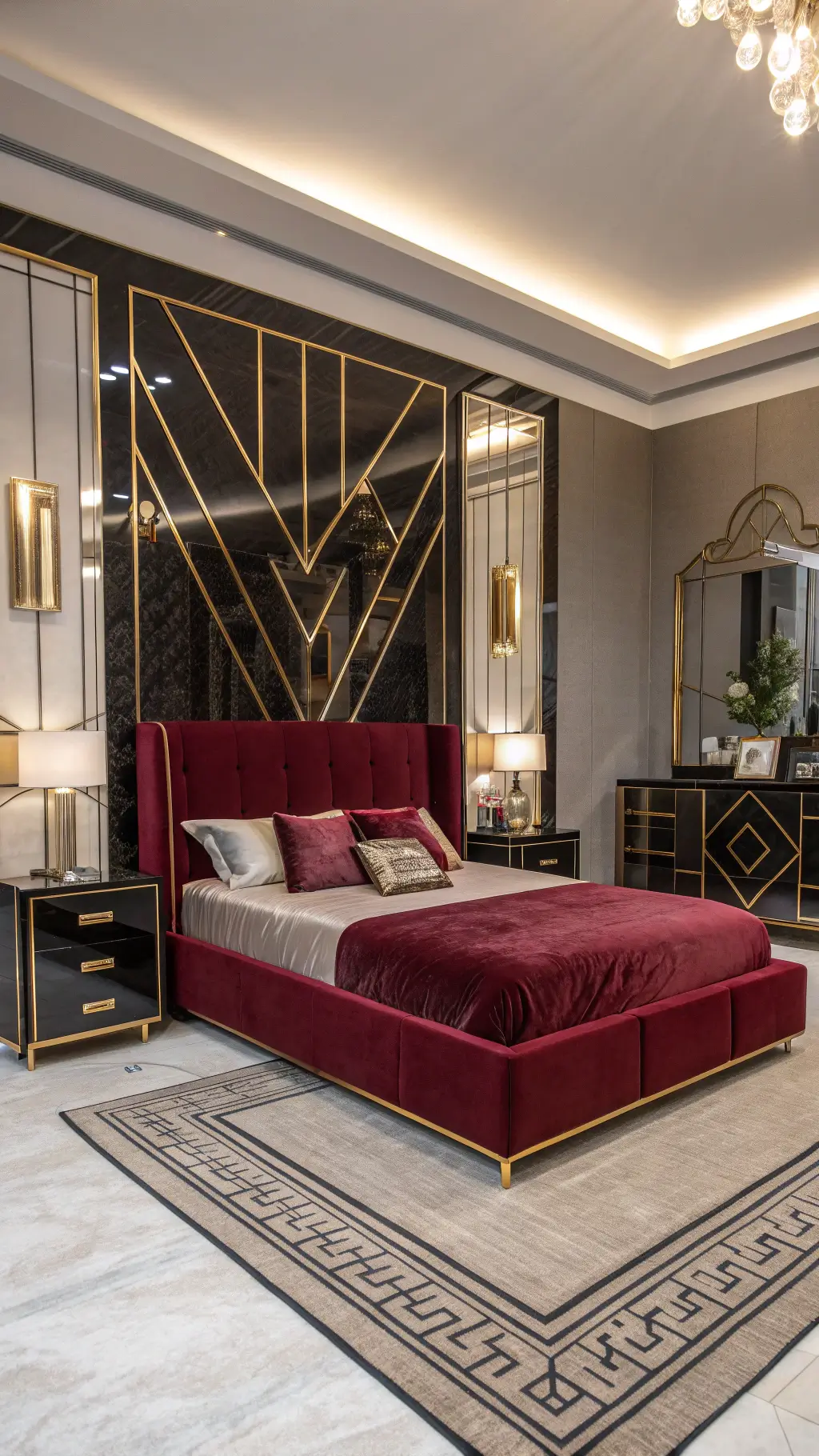
Think geometric shapes everywhere—chevrons, zigzags, sunbursts, and stepped forms that create visual rhythm and movement. These aren’t random patterns thrown together. They’re carefully orchestrated to create symmetry and balance while still feeling energetic and alive.
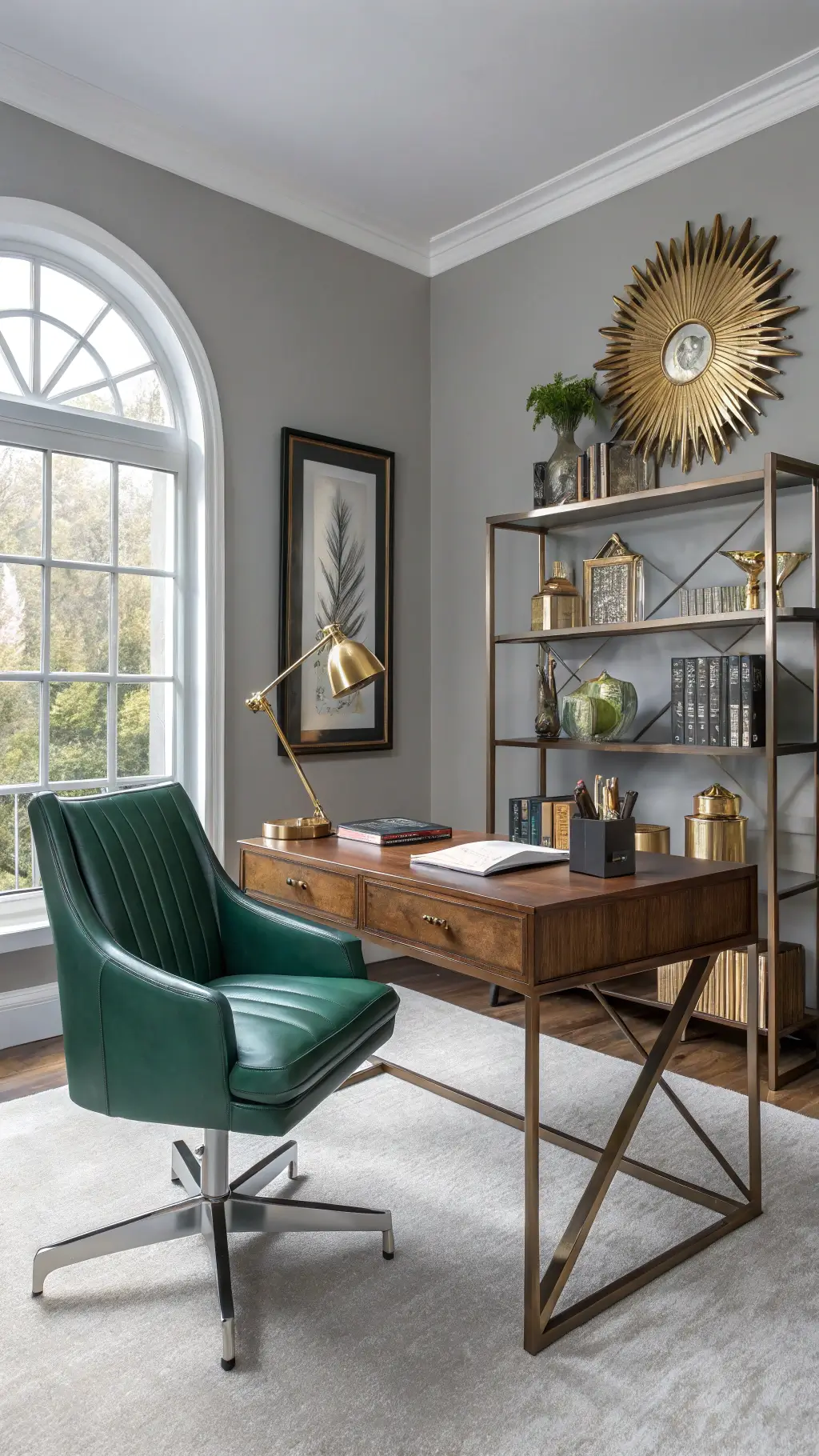
Metallic finishes are non-negotiable. Chrome, brass, gold, and silver aren’t just accents—they’re essential players that reflect light and make spaces feel larger and more sophisticated.
💡 Steal This Look
- Paint Color: Benjamin Moore Black Panther 2125-10
- Furniture: Streamlined lacquered credenzas with sunburst inlay, curved velvet channel-tufted sofas, and geometric mirrored console tables
- Lighting: Tiered sunburst chandeliers in polished brass, torchiere floor lamps with fluted glass shades, and geometric sconces with frosted glass panels
- Materials: High-gloss lacquer, bookmatched marble, polished chrome, exotic veneers like Macassar ebony, shagreen, and beveled mirror
There’s something intoxicating about walking into a space where every angle has been considered, where the light catches a brass edge and suddenly the whole room feels alive. Art Deco taught me that luxury isn’t about excess—it’s about precision.
Colors That Make Art Deco Pop
The Art Deco color palette is where things get really exciting.
Bold Jewel Tones:
- Deep burgundy and wine red
- Rich emerald green
- Sapphire and navy blue
- Mustard and golden yellow
- Hot pink and fuchsia
Sophisticated Neutrals:
- Cream and ivory
- Soft beige
- Charcoal grey
- Jet black
Metallic Must-Haves:
- Polished gold
- Warm brass
- Cool chrome
- Shimmering silver

I learned the hard way that you can’t just throw all these colors together and hope for the best. Start with a neutral base—I used soft grey walls in my living room—then introduce one or two bold jewel tones as your statement colors. The metallics weave everything together like visual glue.
🌟 Steal This Look
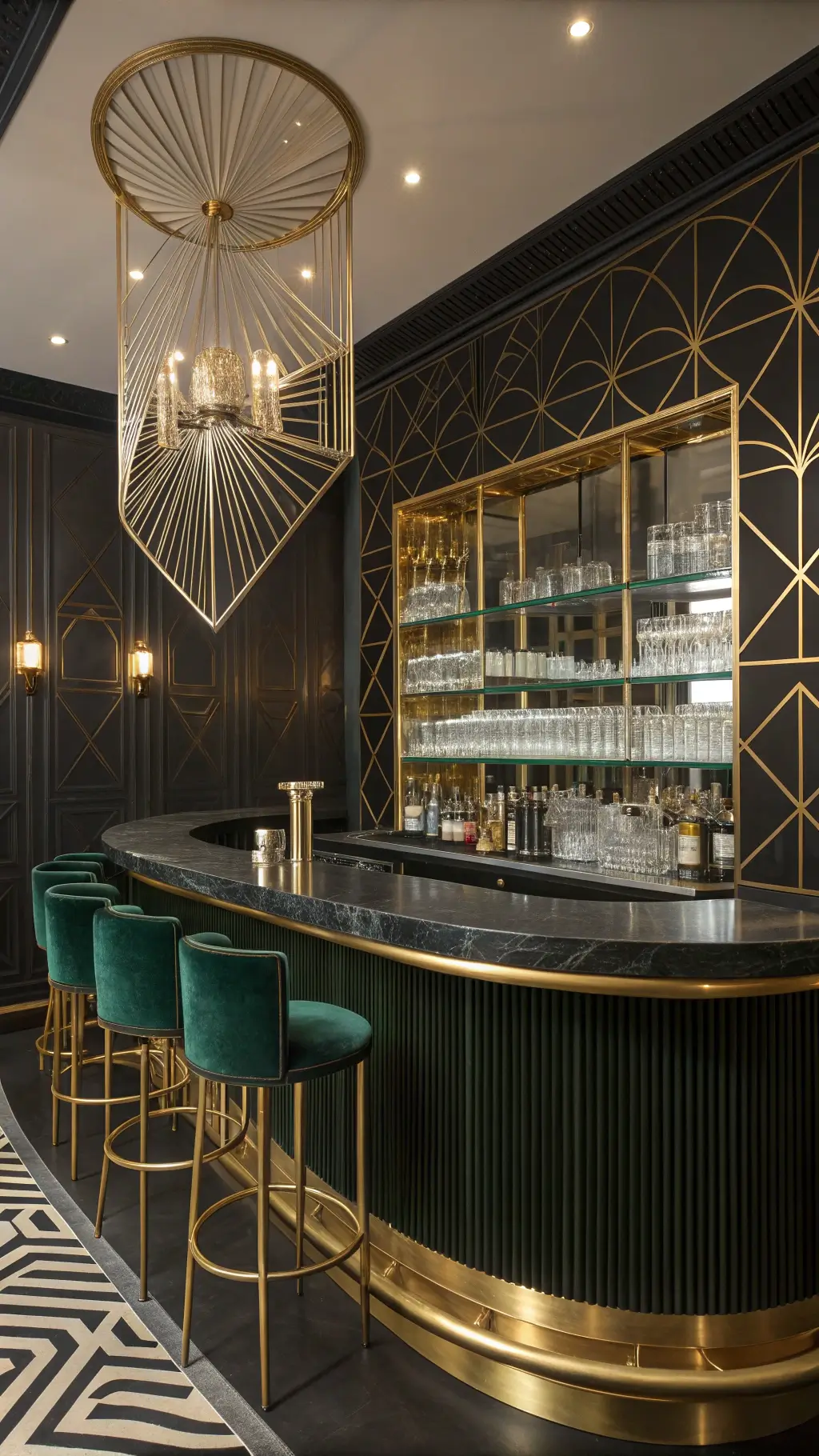
- Paint Color: Farrow & Ball Down Pipe 26
- Furniture: Streamlined velvet sofa in emerald green, lacquered bar cabinet with geometric inlay, sunburst mirror console table
- Lighting: Tiered glass chandelier with brass framework, geometric sconces with frosted glass shades
- Materials: Lacquered wood, polished brass, velvet upholstery, mirrored surfaces, exotic marble, shagreen
I still remember walking into my living room after painting the walls Down Pipe and hanging that emerald velvet curtain—suddenly the brass lamp I’d owned for years looked intentional, not accidental. That’s the alchemy of this palette.
Must-Have Furniture Pieces
Your furniture choices will make or break your Art Deco vision.
Investment Pieces That Anchor the Room:
I saved up for six months to buy my first real Art Deco-inspired piece—a velvet tufted sofa in deep emerald green with chrome legs. Worth every penny.
- Art Deco coffee tables with geometric bases and glass or marble tops
- Mirrored console tables that reflect light and create depth
- Upholstered dining chairs in rich fabrics with metal frames
- Geometric headboards that make bold statements in bedrooms
- Lacquered cabinets in black or deep colors
Budget Reality Check:
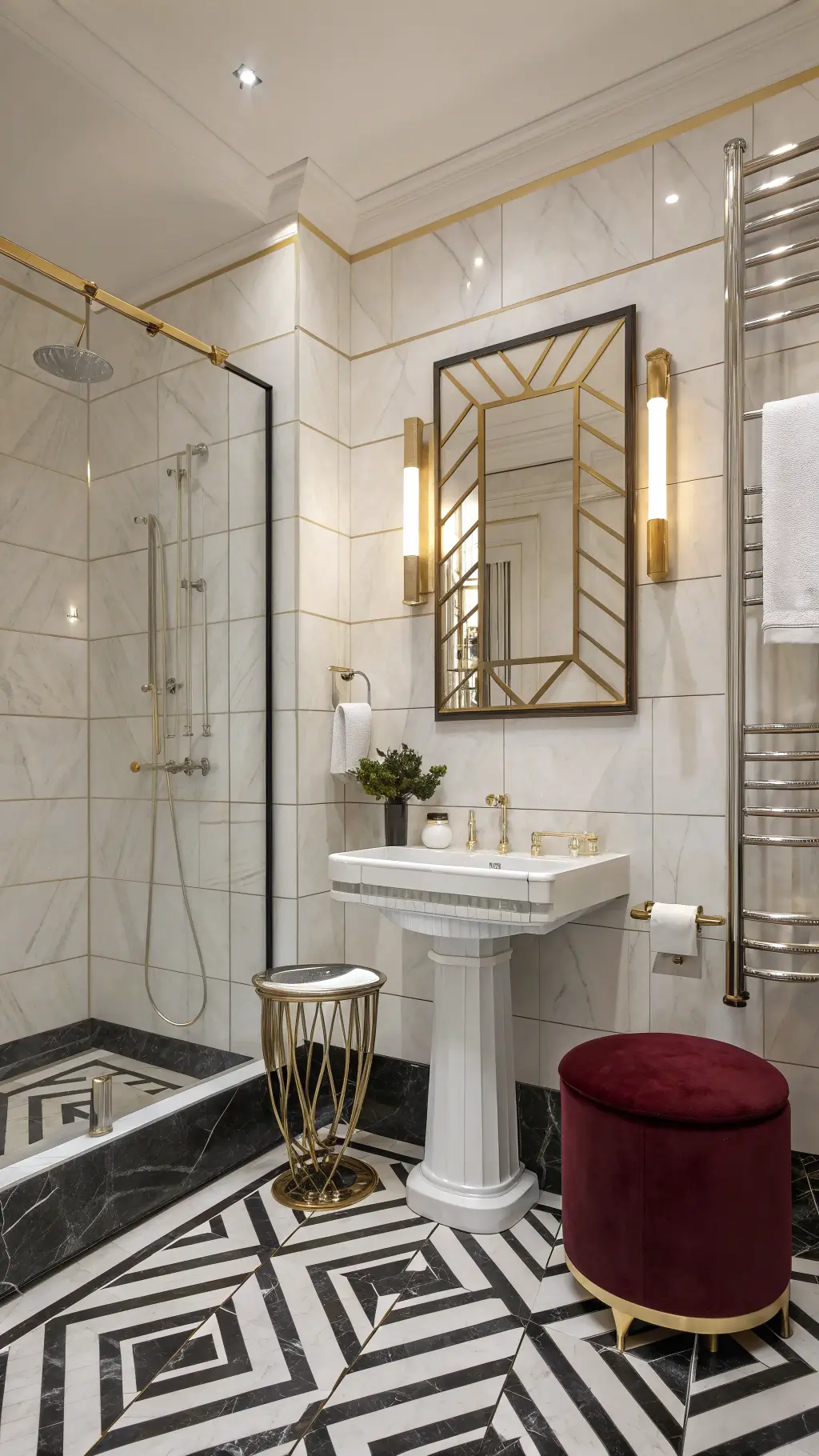
You don’t need to buy everything at once. I started with one statement sofa, added a mirrored side table three months later, then gradually built up the look over about a year. The key is choosing quality over quantity—one amazing piece beats five mediocre ones every single time.
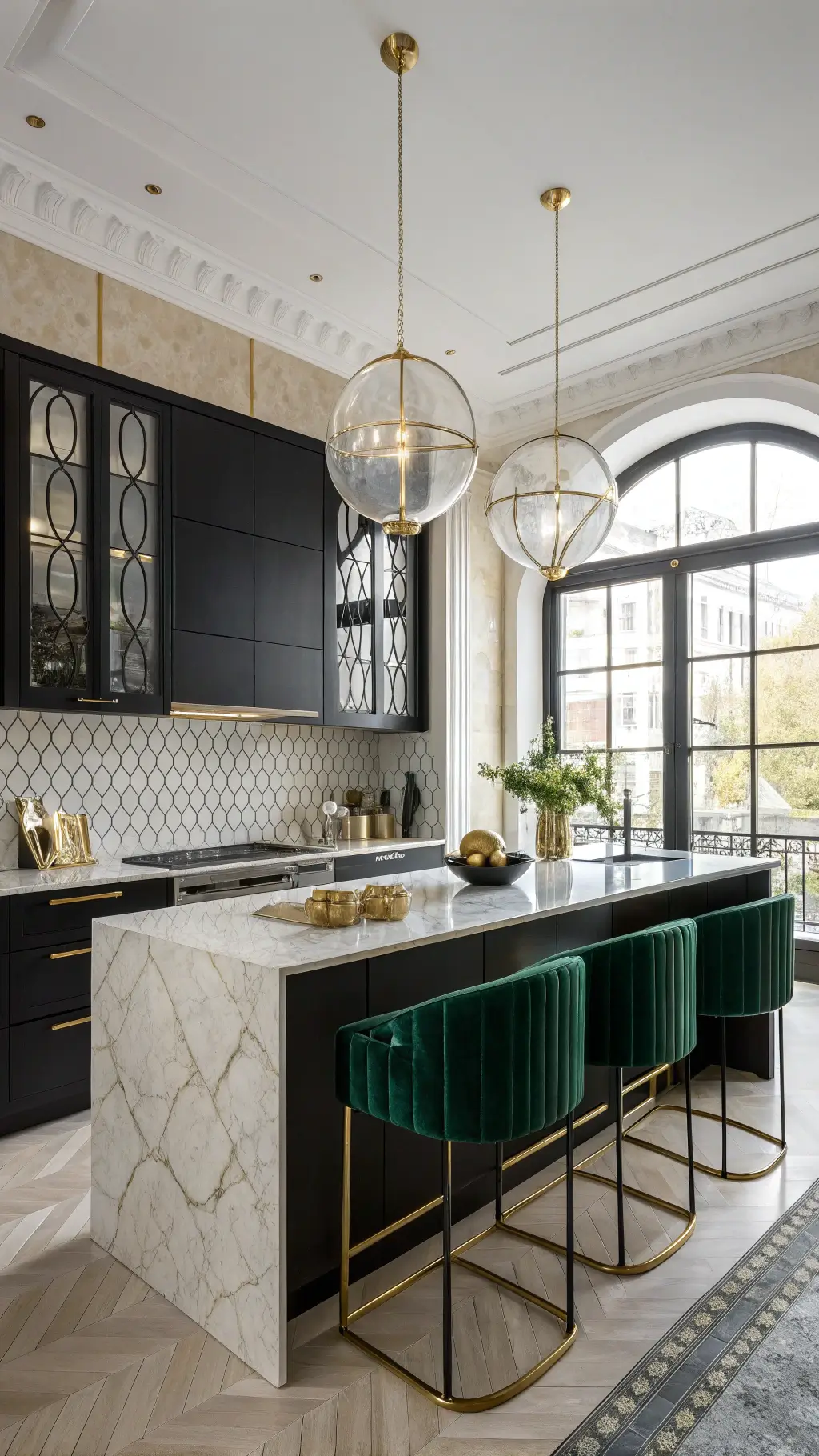
🎨 Steal This Look
- Paint Color: Behr Black Mocha N140-7
- Furniture: Velvet tufted sofa in deep emerald green with chrome legs, geometric marble-top coffee table with brass base, mirrored console table with beveled edges
- Lighting: Tiered crystal chandelier with geometric brass frame, pair of torchiere floor lamps with frosted glass shades
- Materials: High-gloss lacquer, polished chrome, beveled mirror, velvet upholstery, marble, brass, exotic woods like macassar ebony
There’s something transformative about walking into a room where one perfect velvet sofa commands attention—the chrome catching morning light, the depth of green shifting with the hour. That single piece taught me Art Deco isn’t about filling space, it’s about curating drama.
Layering in the Glamour
Once your furniture foundation is solid, it’s time to add the layers that really bring Art Deco to life.
Essential Accessories:
- Geometric table lamps with chrome or brass bases
- Sunburst mirrors as dramatic wall art
- Velvet throw pillows in jewel tones with geometric patterns
- Brass bar carts for that authentic 1920s cocktail vibe
- Art Deco wall sconces flanking mirrors or artwork
- Faux fur throws draped over chairs or sofas
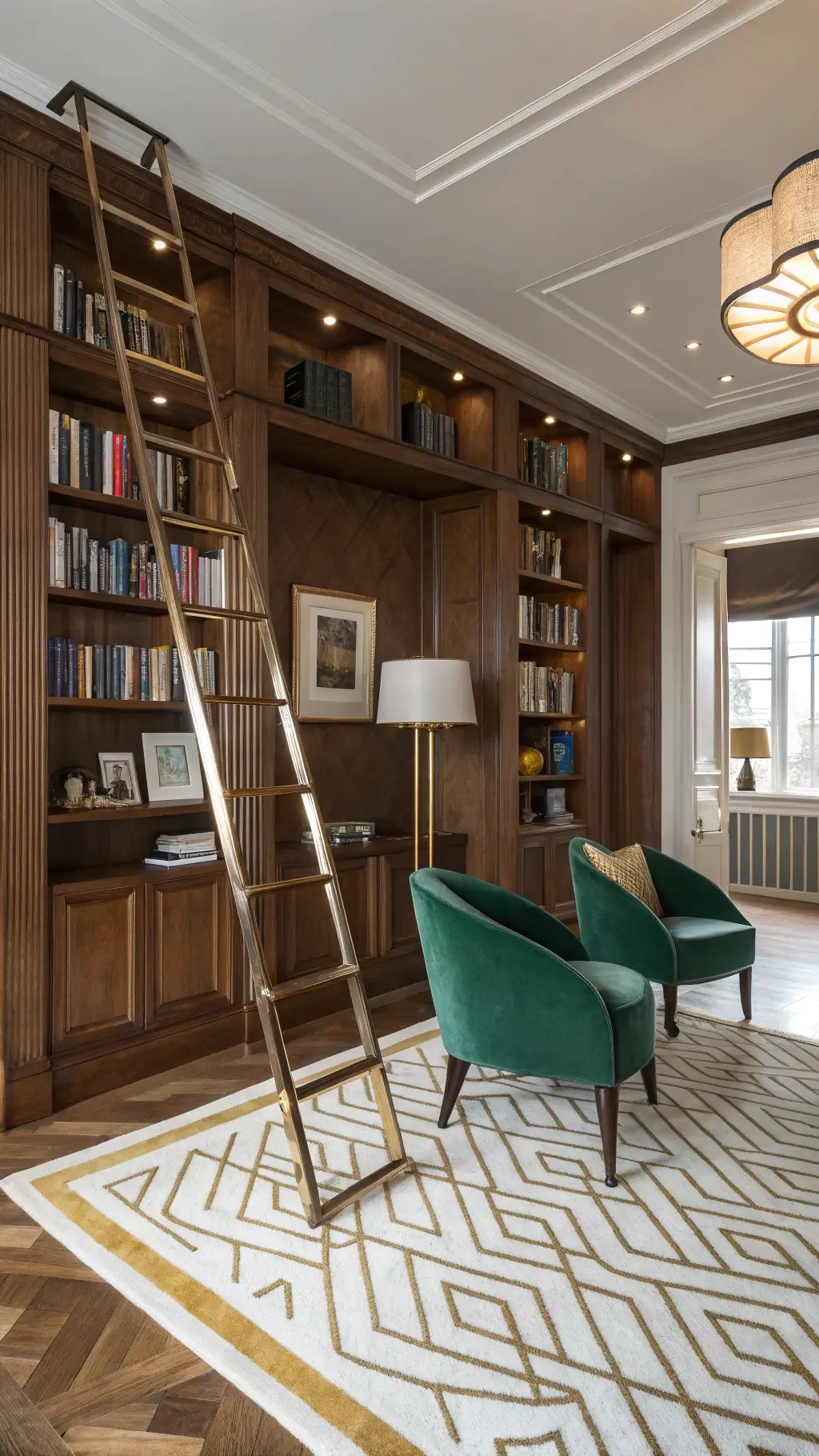
The Materials That Matter:
- Polished chrome and brushed brass
- Rich velvets and silky satins
- Glossy lacquered finishes
- Marble and stone (or convincing faux versions)
- Glass and
🌟 Steal This Look
- Paint Color: Valspar Royal Navy 4009-1 for deep sapphire accent walls, Valspar Polished Silver 4005-1B for metallic ceiling treatments, Valspar Onyx Black 4011-2 for dramatic lacquered trim
- Furniture: Streamlined velvet channel-tufted sofas with rounded arms, lacquered burl wood console tables with brass inlay, curved barrel-back club chairs in emerald or sapphire velvet, mirrored waterfall-edge coffee tables
- Lighting: Tiered crystal chandeliers with angular brass frames, geometric sunburst wall sconces with frosted glass shades, table lamps with stacked sphere or zigzag bases in polished chrome
- Materials: High-gloss lacquered surfaces, brushed brass and polished chrome metals, crushed velvet and silk textiles, bookmatched marble veining, beveled mirror panels, exotic burl wood veneers
I always tell clients to hunt vintage bar carts first—the patina on authentic 1920s brass can’t be replicated, and it becomes the conversation piece that anchors every other layer.