Art Deco Kitchen: Transform Your Space Into a Glamorous 1920s Masterpiece
Art Deco kitchen design is honestly one of those styles that makes my heart skip a beat every single time I walk into a space that nails it.
There’s something about the way geometric patterns catch the light, how brass fixtures gleam against dark marble, and the sheer boldness of it all that just screams “I know what I’m doing” without being pretentious about it.
I’m gonna be real with you—creating an Art Deco kitchen isn’t exactly a weekend project, and it’s definitely not the cheapest route you could take.
But if you’ve been scrolling through design inspiration late at night wondering why your kitchen feels so… boring… this might be exactly what you need.
🖼 Steal This Look
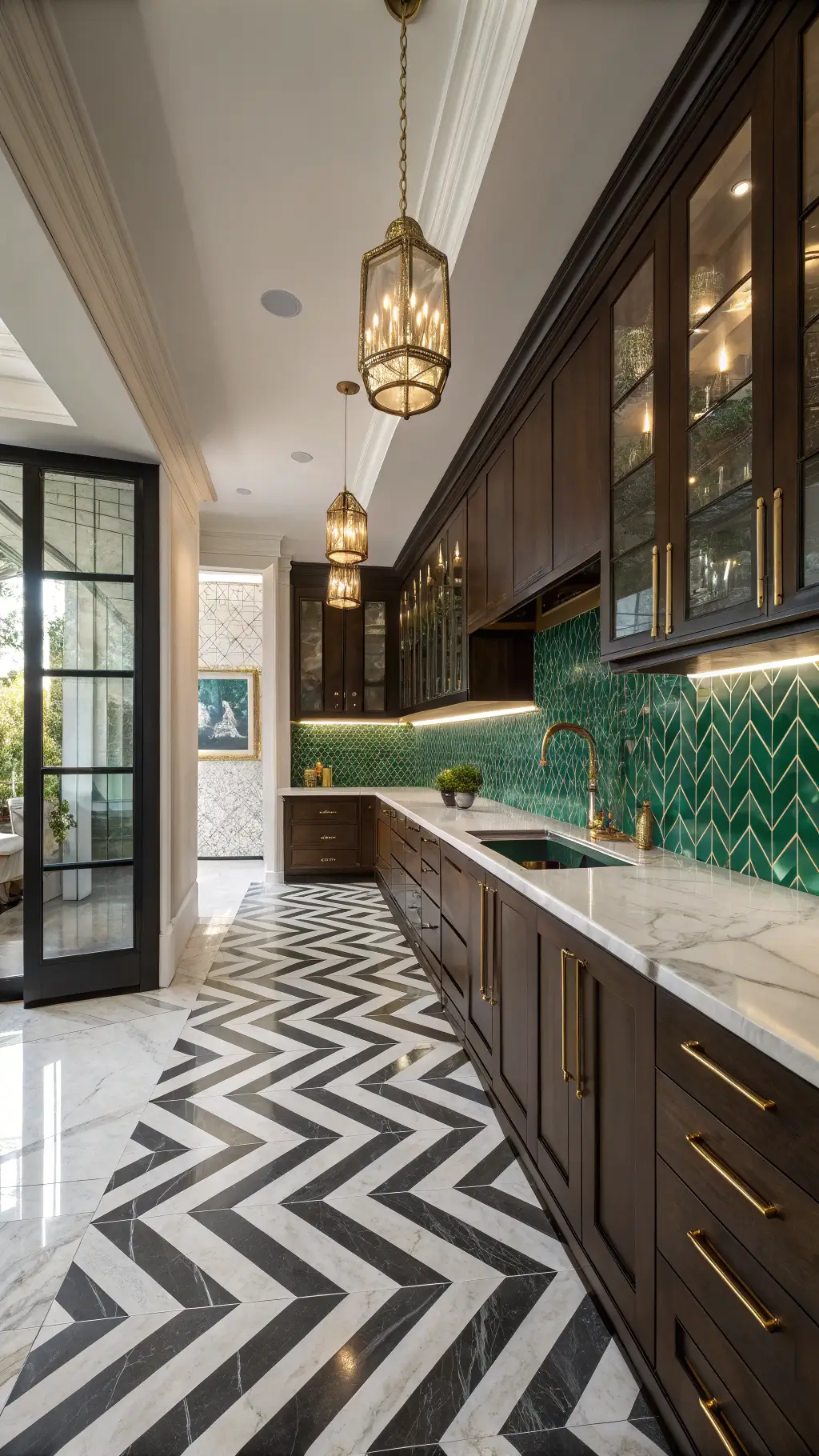
- Paint Color: Sherwin-Williams Black Magic SW 6991
- Furniture: lacquered navy blue kitchen cabinets with brass inlay detailing, waterfall-edge marble island with geometric base, curved bar stools in emerald velvet with brass foot rails
- Lighting: tiered glass globe chandelier with brass framework, symmetrical pendant lights with frosted glass and stepped metal shades
- Materials: Calacatta Viola marble with dramatic veining, polished brass hardware and trim, high-gloss lacquer finishes, fluted glass cabinet inserts, terrazzo flooring with brass divider strips
I once spent three months hunting down the perfect stepped brass pulls for a client’s Art Deco revival, and watching that hardware transform flat cabinet doors into something worthy of a Fitzgerald novel never gets old.
What Makes Art Deco Kitchens So Special?
The first time I actually understood Art Deco was when I visited my friend Sarah’s newly renovated kitchen in Brooklyn.
She’d gutted the whole thing and rebuilt it with these incredible black and white geometric tiles that made the floor look like a work of art.
The cabinetry had these clean, crisp lines with barely-there brass handles that somehow looked both vintage and ultra-modern at the same time.
I literally stood there for five minutes just staring at her backsplash—a chevron pattern in emerald green and cream that caught the pendant lighting in the most amazing way.
That’s when it clicked for me: Art Deco is about drama, geometry, and unapologetic luxury.
This style pulls from the 1920s through the 1940s, an era when people were obsessed with progress, glamour, and making statements.
Art Deco doesn’t whisper—it announces itself.
The Reality Check: Time and Money
Time Investment:
- Full renovation: 4-8 weeks (sometimes longer if custom work is involved)
- Styling updates to existing space: 1-2 weeks
- Planning and design phase: Don’t skip this—give yourself at least 2-3 weeks
Budget Breakdown:
- Starting with accent pieces: $500-$2,000
- Mid-range renovation: $15,000-$30,000
- Full luxury transformation: $50,000-$100,000+
I know those numbers might make you wince, but here’s the thing—you can absolutely do this in phases.
I started my own kitchen’s Art Deco transformation with just new cabinet hardware and a geometric backsplash, which ran me about $1,200 total.
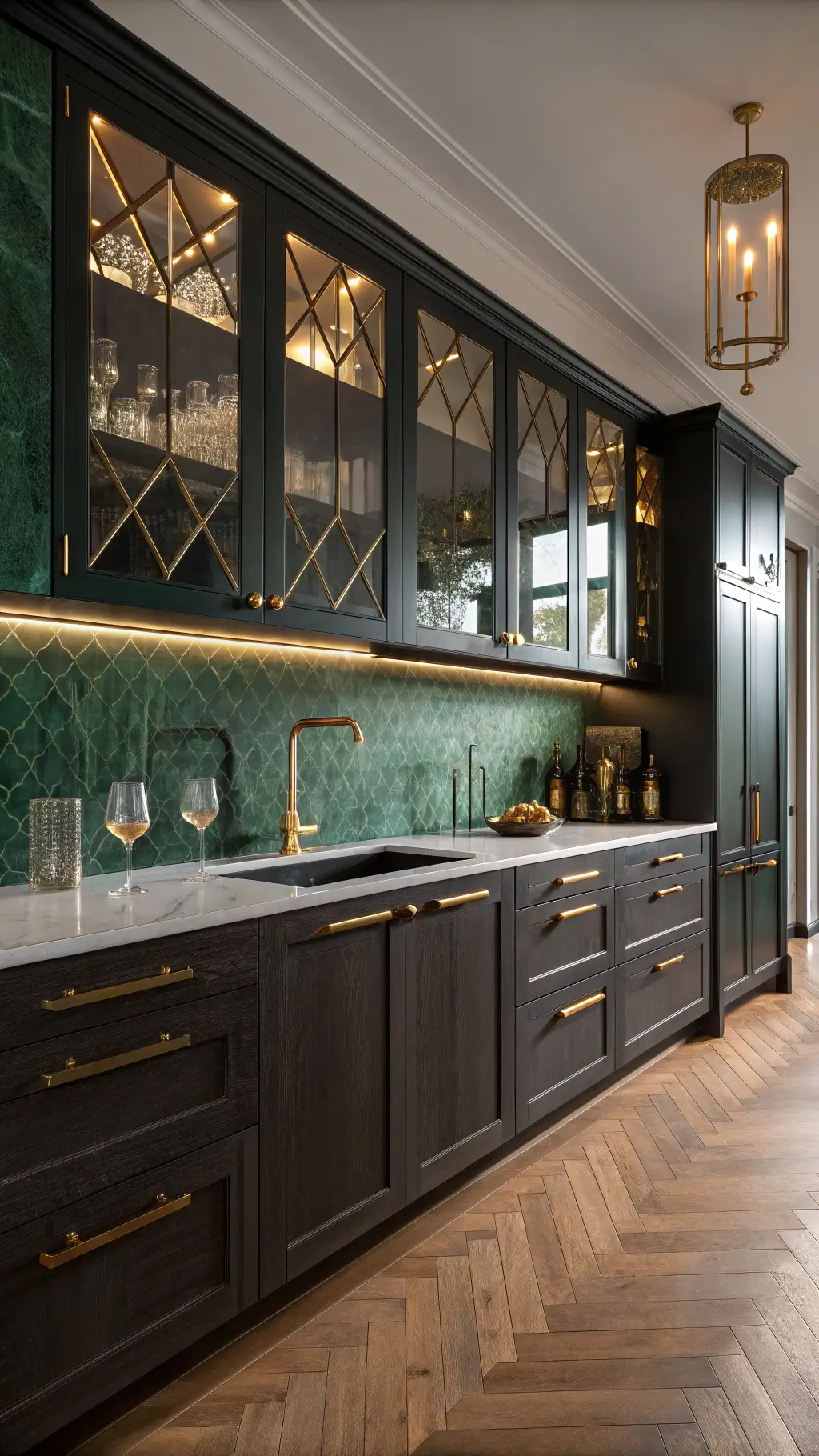
★ Steal This Look
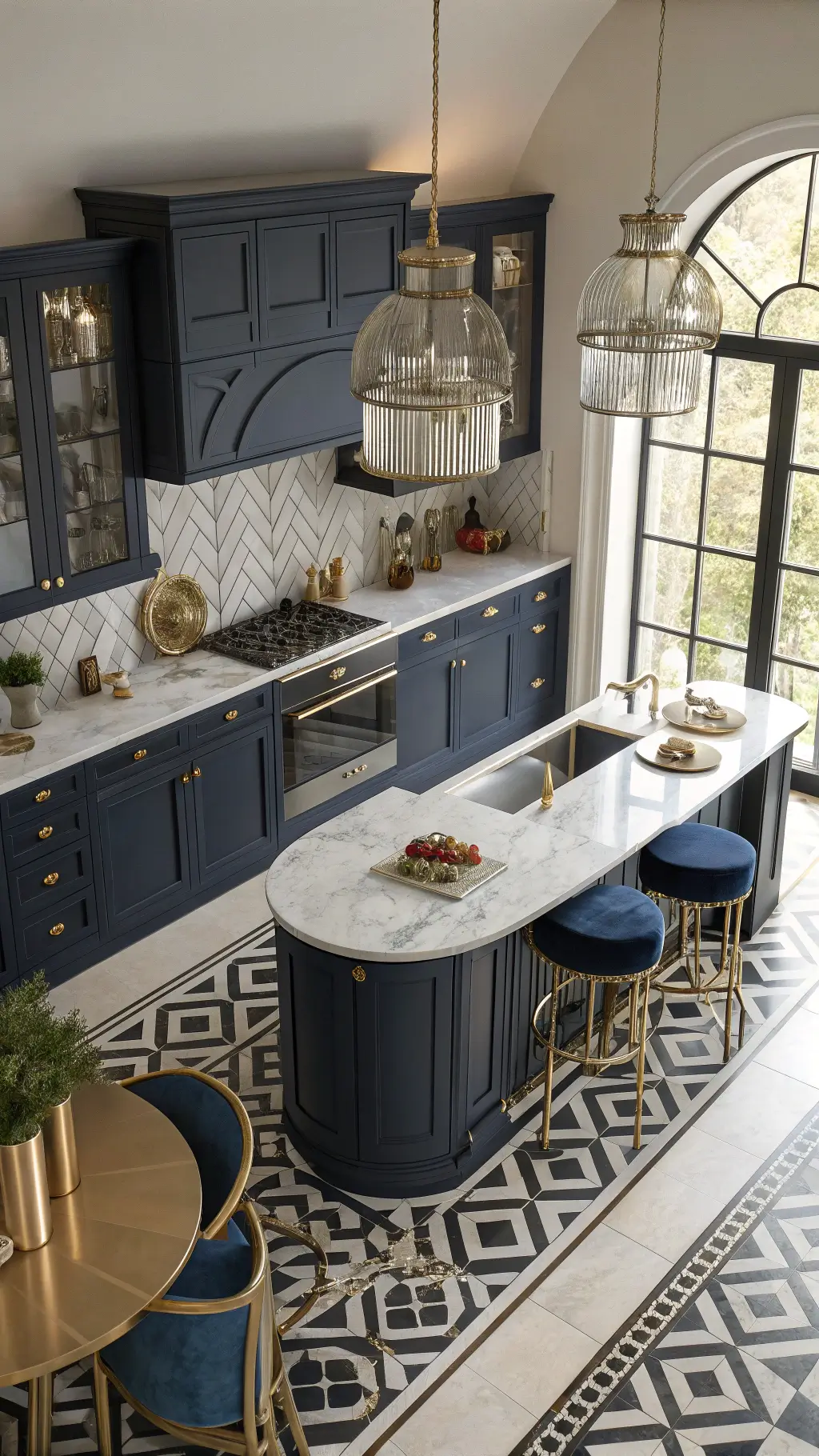
- Paint Color: Benjamin Moore Black Jack 2133-20
- Furniture: Streamlined flat-panel cabinetry with minimal brass pulls, waterfall-edge marble or quartz island with geometric base
- Lighting: Tiered glass globe pendant lights with brass or blackened bronze hardware, symmetrical placement over island
- Materials: High-gloss lacquered cabinets, polished brass accents, geometric marble or ceramic tile, mirrored or metallic backsplash elements, rich jewel-tone veining
There’s something about walking into a kitchen that feels like a set piece from a Fitzgerald novel—every morning coffee becomes a small ceremony when your surroundings carry that much intentional glamour.
The Foundation: Colors and Materials That Define the Look
Art Deco thrives on contrast and luxury materials.
You’re not working with farmhouse whites or Scandinavian minimalism here—this is bold, high-impact design.
Your Core Color Palette:
- Black and white (the classic combination)
- Jewel tones like emerald green, sapphire blue, ruby red
- Metallics: brass, gold, chrome, silver
- Deep navy or charcoal gray
- Cream or ivory as a softer neutral
Must-Have Materials:
- Marble: Nothing says luxury like real marble countertops
- Granite or quartz: If marble’s outside your budget
- Brass and chrome: For fixtures, hardware, and accents
- High-quality wood veneers: Rich, dark woods work best
- Glass: Frosted, clear, or even colored for cabinet doors
- Geometric tiles: Ceramic or porcelain in bold patterns
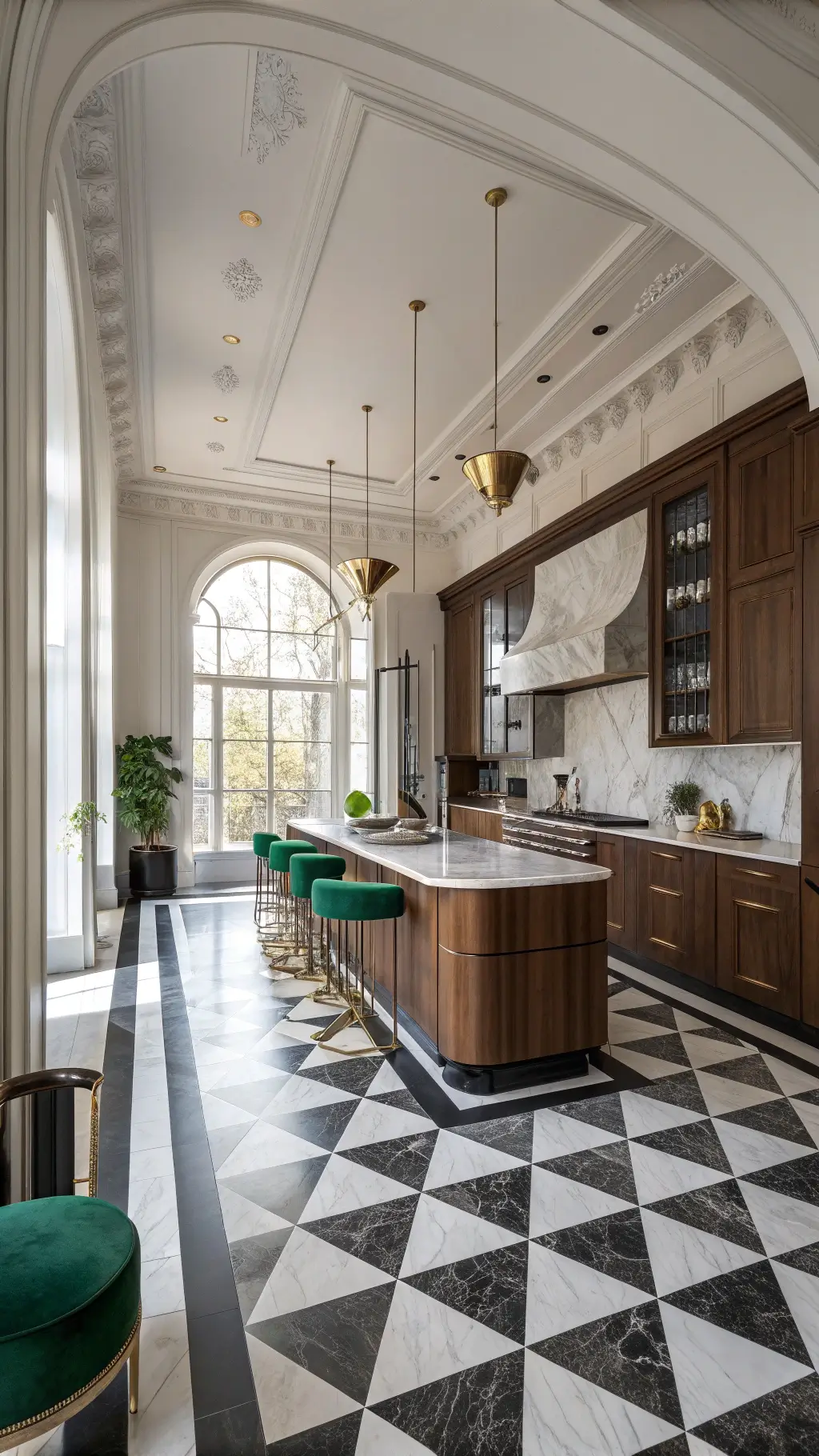
🖼 Steal This Look
- Paint Color: Farrow & Ball Hague Blue 30 for deep navy cabinetry, Farrow & Ball All White 2005 for crisp ceiling and trim contrast, Farrow & Ball Studio Green 93 for jewel-toned accent walls
- Furniture: Streamlined walnut or ebony dining set with chrome saber legs, curved bar cabinet with mirrored interior, geometric velvet-upholstered counter stools with brass foot rails
- Lighting: Tiered glass globe chandelier with brass framework, geometric sconces with frosted glass shades, linear pendant with stepped metal detailing
- Materials: Calacatta Gold marble waterfall island, polished brass cabinet pulls with stepped geometric profiles, black lacquered upper cabinets, terrazzo or bold hexagonal porcelain floor tile, fluted glass cabinet inserts
I always tell clients that Art Deco kitchens feel like dressing for a cocktail party—the materials should catch light and cast shadows, turning everyday cooking into performance.
Must-Have Elements That Make It Actually Art Deco
The Hero Pieces
1. Statement Cabinetry
Your cabinets are doing the heavy lifting here.
Art Deco cabinetry features clean lines, geometric shapes, and minimal ornamentation.
Think sleek, handle-less fronts with subtle decorative lines rather than chunky traditional hardware.
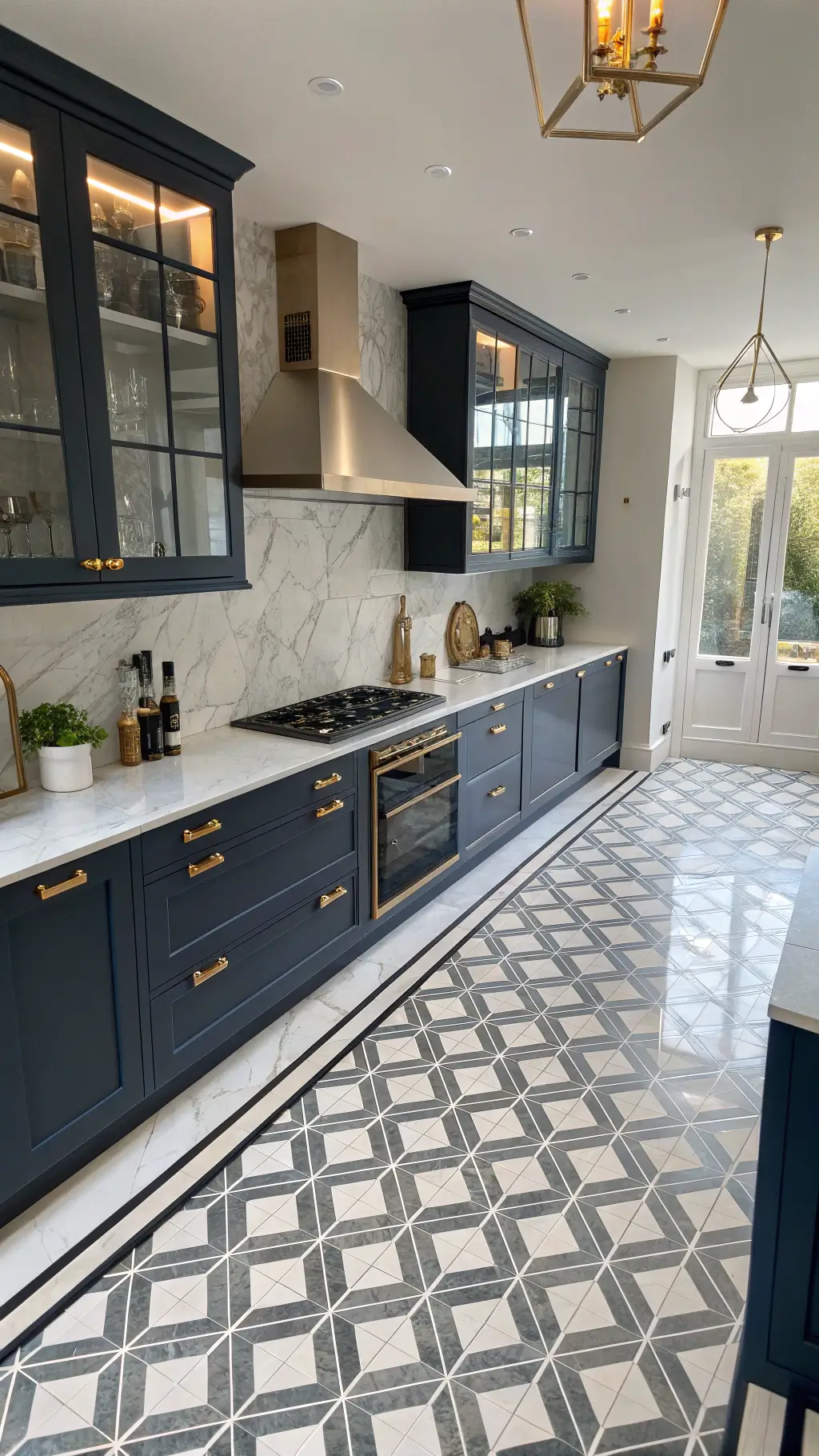
2. Geometric Lighting
This is non-negotiable.
Your lighting fixtures need to make a statement and embrace geometric forms.
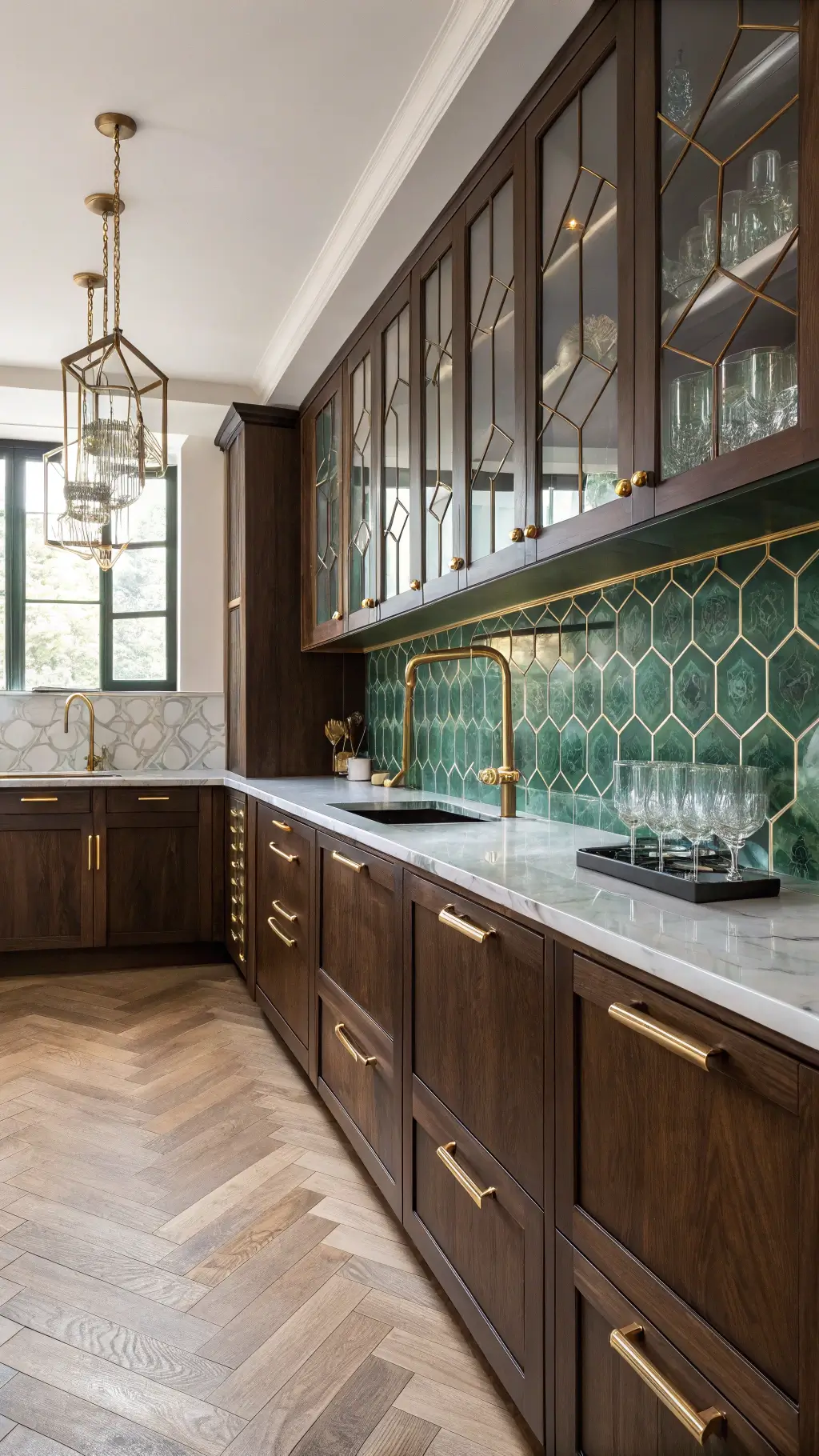
In my kitchen, I installed three brass pendant lights above the island with frosted glass shades in a hexagonal shape.
3. The Show-Stopping Backsplash
If there’s one place to go absolutely wild with pattern, it’s your backsplash.
This is where Art Deco really gets to play.
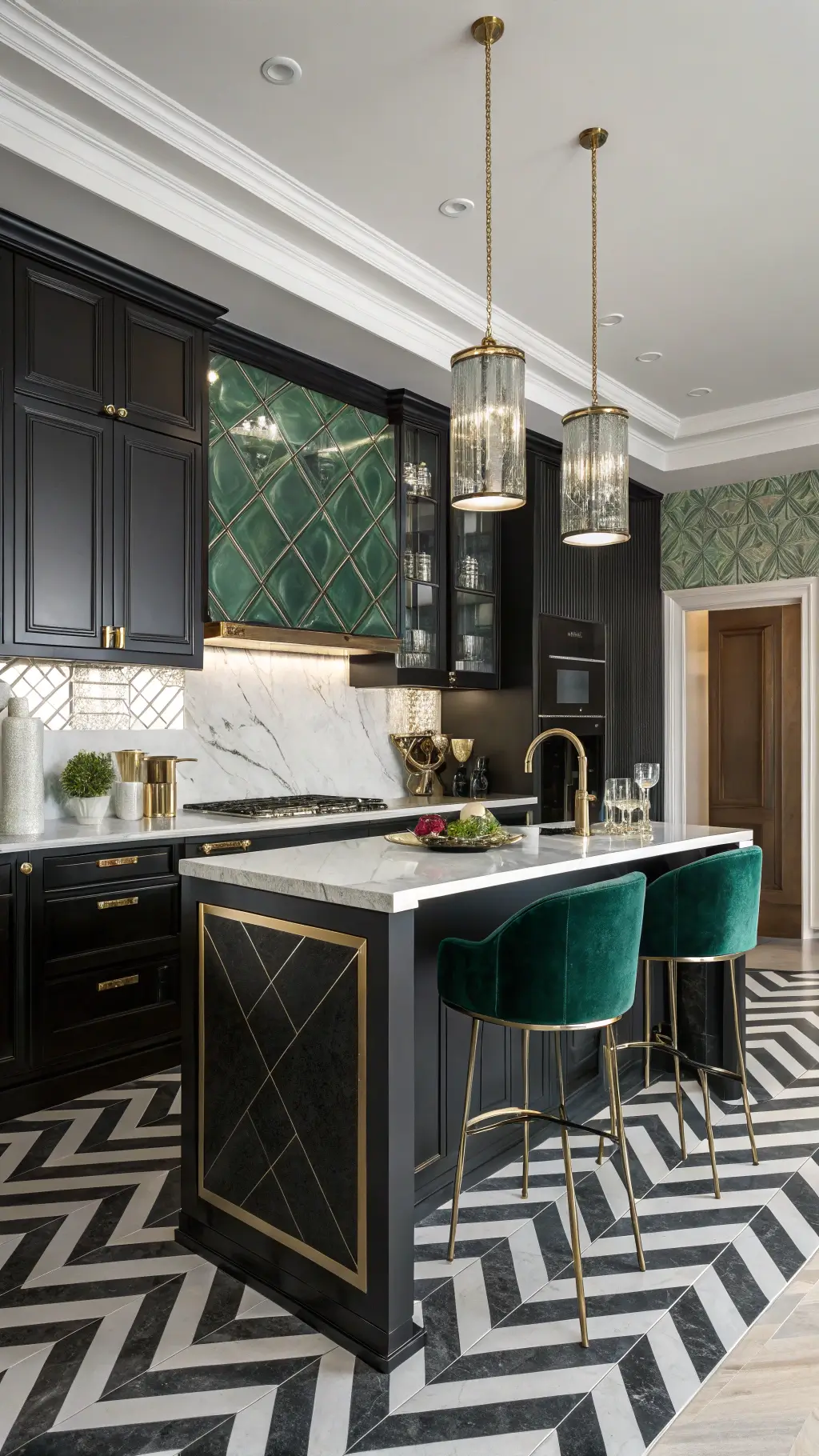
4. Sculptural Island
If you’ve got space for an island, make it architectural.
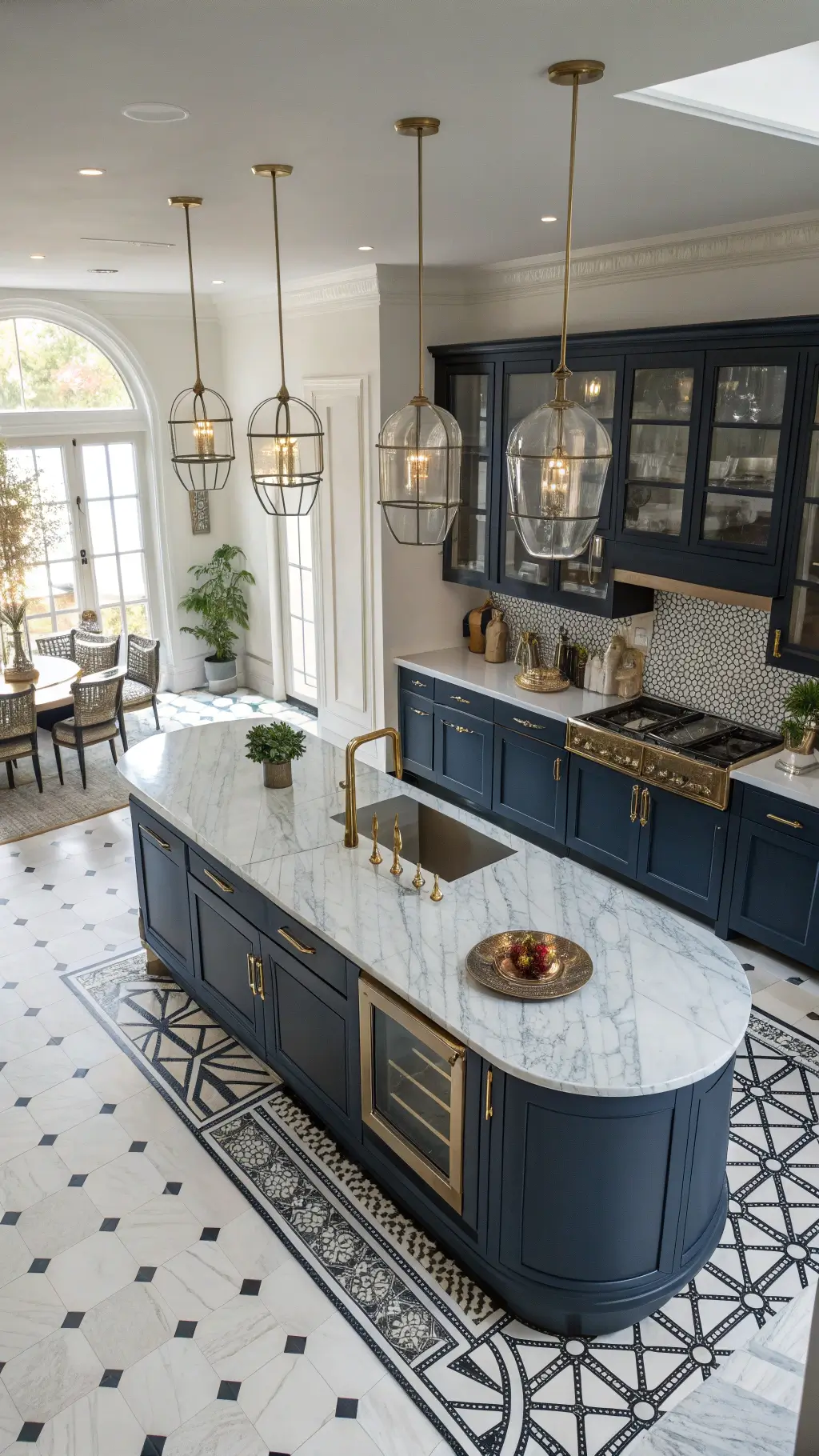
Art Deco islands often feature curved edges that contrast beautifully with the angular elements elsewhere in the kitchen.
★ Steal This Look
- Paint Color: Behr Broadway ECC-10-2
- Furniture: Handle-less flat-panel cabinetry with subtle routed geometric detailing, waterfall-edge island in black marble or lacquered wood with brass inlay
- Lighting: Brass geometric pendant lights with hexagonal or sunburst frosted glass shades, 3-light cluster over island
- Materials: High-gloss lacquer, polished brass, black marble, mirrored glass, exotic wood veneers, terrazzo or geometric tile
I spent months hunting down the right brass pendants because the hexagonal glass shade was non-negotiable—when I finally found them, the whole kitchen clicked into that 1920s glamour I was chasing.
The Details That Elevate Everything
Hardware and Fixtures
This is where I actually started my transformation because it’s relatively affordable and makes an immediate impact.
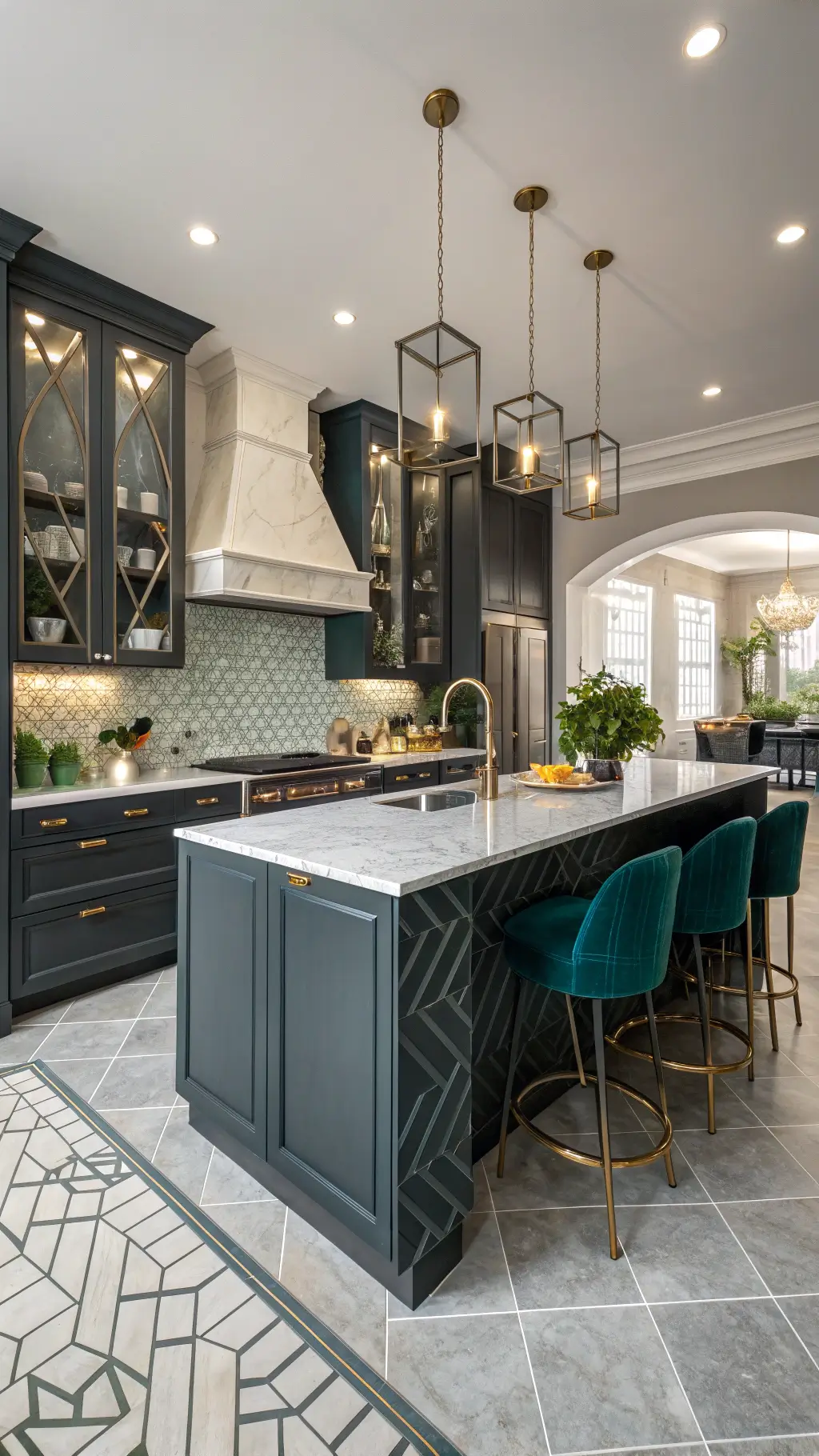
Flooring That Makes a Statement
Art Deco floors are often as dramatic as the backsplash.
Curves Meet Angles
Art Deco isn’t just sharp geometric shapes. The style actually thrives on the contrast between angles and curves.
🌟 Steal This Look
- Paint Color: Valspar Evening Shadow 4005-2C
- Furniture: Streamlined walnut bar stools with channel-tufted velvet seats, lacquered walnut kitchen island with brass inlay detailing, geometric glass-front upper cabinets with brass trim
- Lighting: Tiered brass chandelier with frosted glass globes and stepped geometric silhouette, paired with symmetrical brass sconces flanking the range hood
- Materials: Polished Calacatta marble with bold veining, brushed brass hardware, lacquered wood in deep jewel tones, terrazzo flooring with brass divider strips, ribbed and reeded glass
I always tell clients to splurge on the hardware first—there’s something almost magical about opening a drawer with a substantial brass pull that feels like it came from a 1920s ocean liner, and it makes even basic cabinets feel like heirloom pieces.