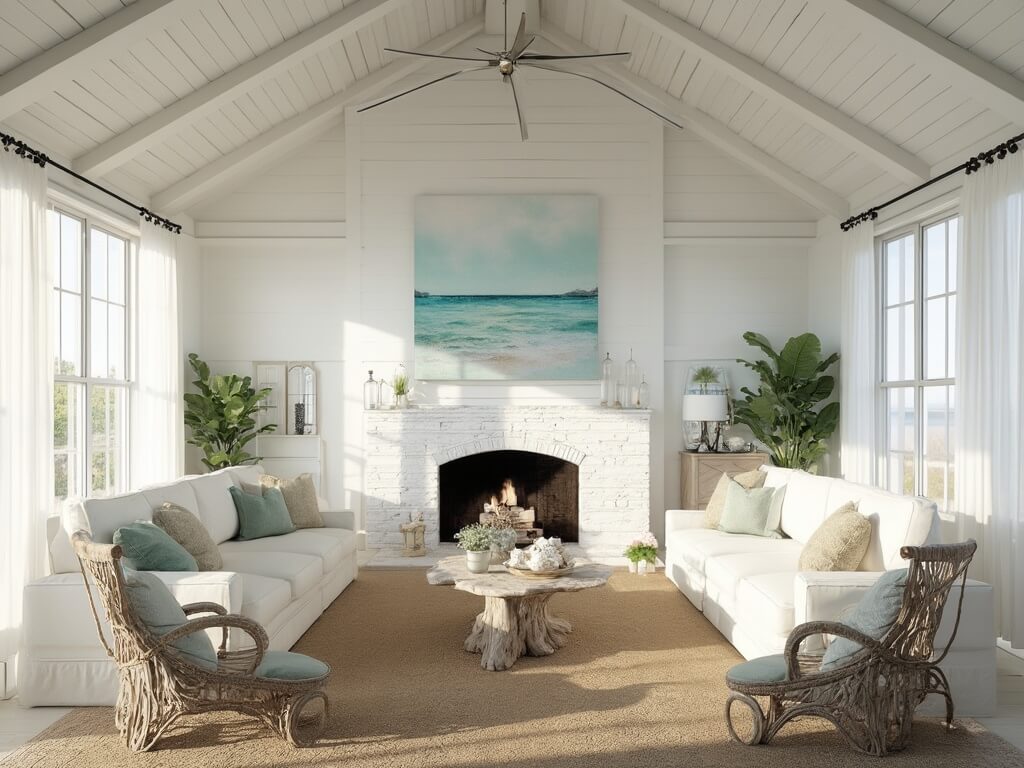
Why Your Attic Is Actually a Hidden Gem
Most people look at their attics and see problems.
I see possibilities.
Those sloped ceilings everyone complains about? They create the most amazing cozy nooks.
That exposed beam you thought was ugly? It’s literally the rustic charm people pay designers thousands of dollars to recreate.
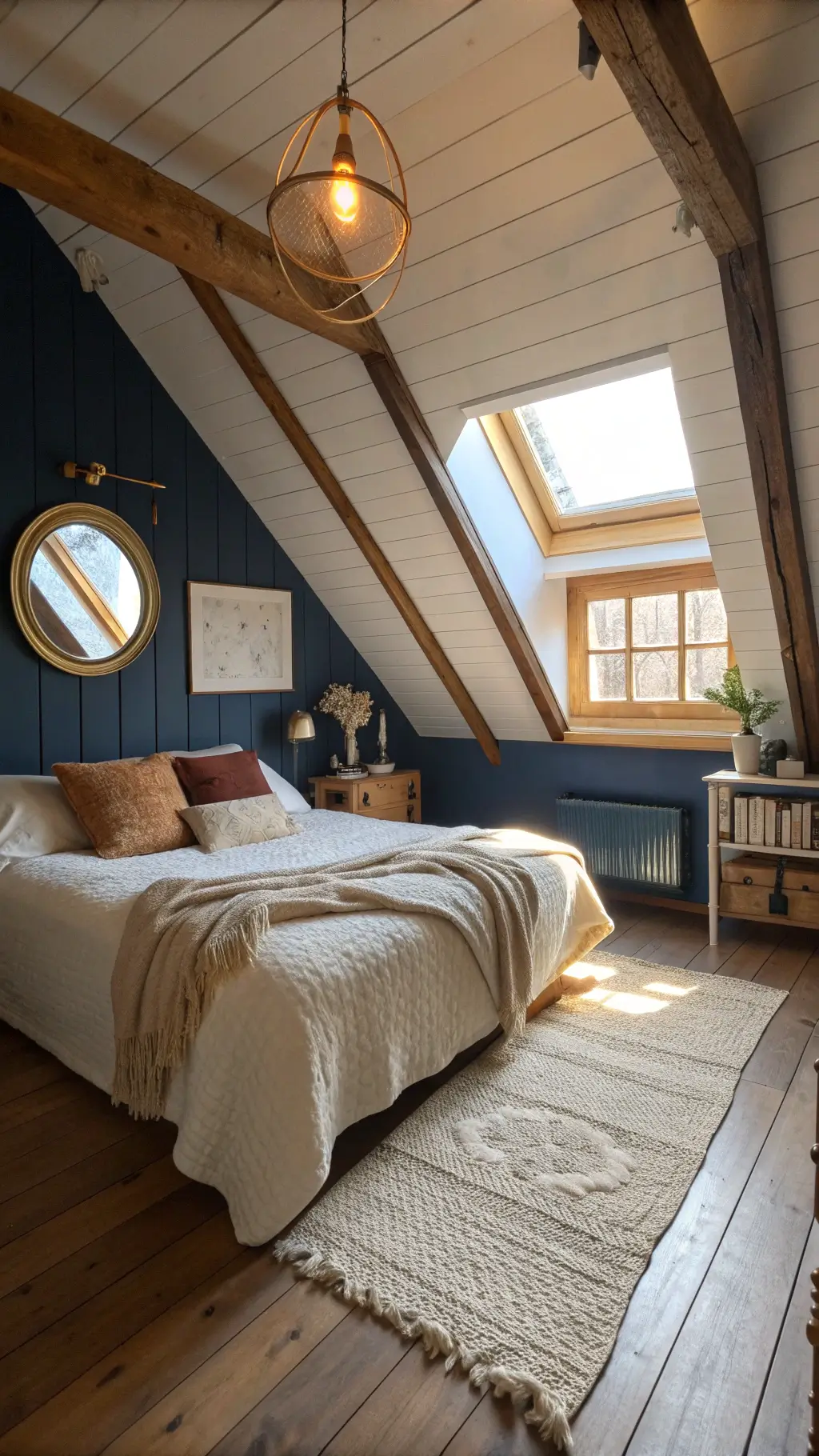
★ Steal This Look
- Paint Color: Sherwin-Williams Accessible Beige SW 7036
- Furniture: low-profile platform bed or daybed tucked under the slope, built-in window seat with storage drawers, vintage trunk as coffee table
- Lighting: exposed bulb pendant lights suspended from beams, adjustable wall sconces for reading nooks
- Materials: raw exposed wood beams, natural linen textiles, reclaimed barn wood accents, matte black metal fixtures
I’ve converted three attics over the years, and the ones that felt magical always leaned into the quirks rather than apologizing for them—that crooked beam became the conversation starter every single time.
What You’re Really Looking At (Time, Money, Skills)
Let me break down the real numbers, because nobody likes surprises when they’re halfway through a project.
- Time commitment: Plan on 4-8 weeks if you’re doing structural stuff like adding windows or building custom storage. Just styling and decorating? You can knock that out in a weekend.
- Budget reality check: $300–$15,000+ depending on scope
- Skill level: If you can hang pictures and assemble IKEA furniture without a meltdown, you’re good
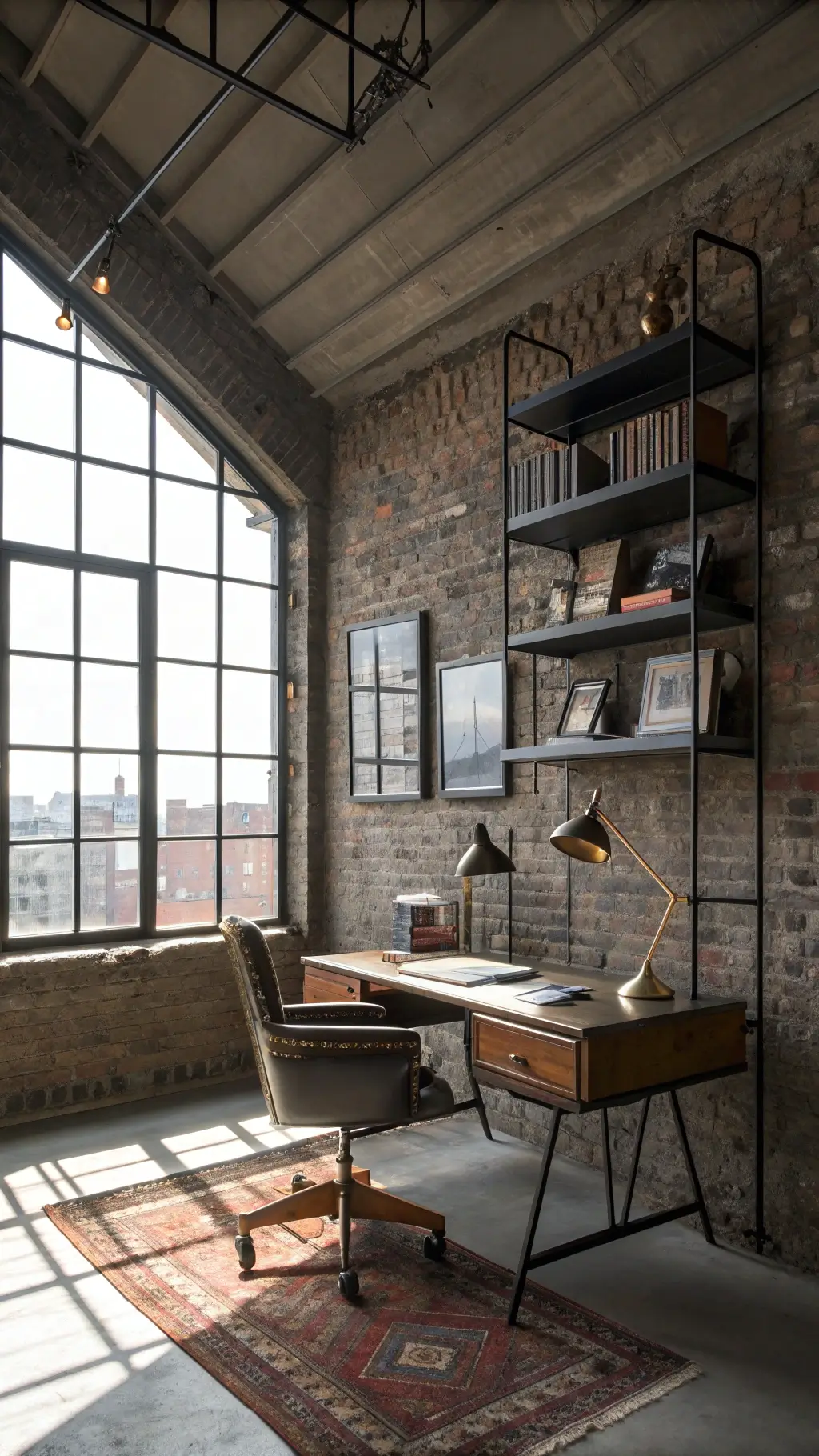
✎ Steal This Look
- Paint Color: Benjamin Moore Chantilly Lace OC-65
- Furniture: Low-profile platform beds with built-in under-bed drawers, wall-mounted floating desks that fold away, custom knee-wall cabinets with pull-out bins
- Lighting: Recessed can lights with adjustable gimbals for sloped ceilings, slim-profile LED flush mounts, plug-in wall sconces with swing arms to avoid electrical work
- Materials: Pine or poplar for custom built-ins (budget-friendly and paintable), plywood with iron-on edge banding for DIY storage, low-pile area rugs to accommodate angled ceilings, peel-and-stick wallpaper for accent walls
I’ve watched too many attic projects stall because someone fell in love with a velvet sectional before measuring the stairwell clearance—this is a room type that rewards patience and a tape measure more than Pinterest dreams.
Getting Your Head Right About Attic Spaces
Attic rooms have their own vibe, and fighting against it is pointless.
The key is embracing what makes them weird instead of trying to make them look like a normal bedroom.
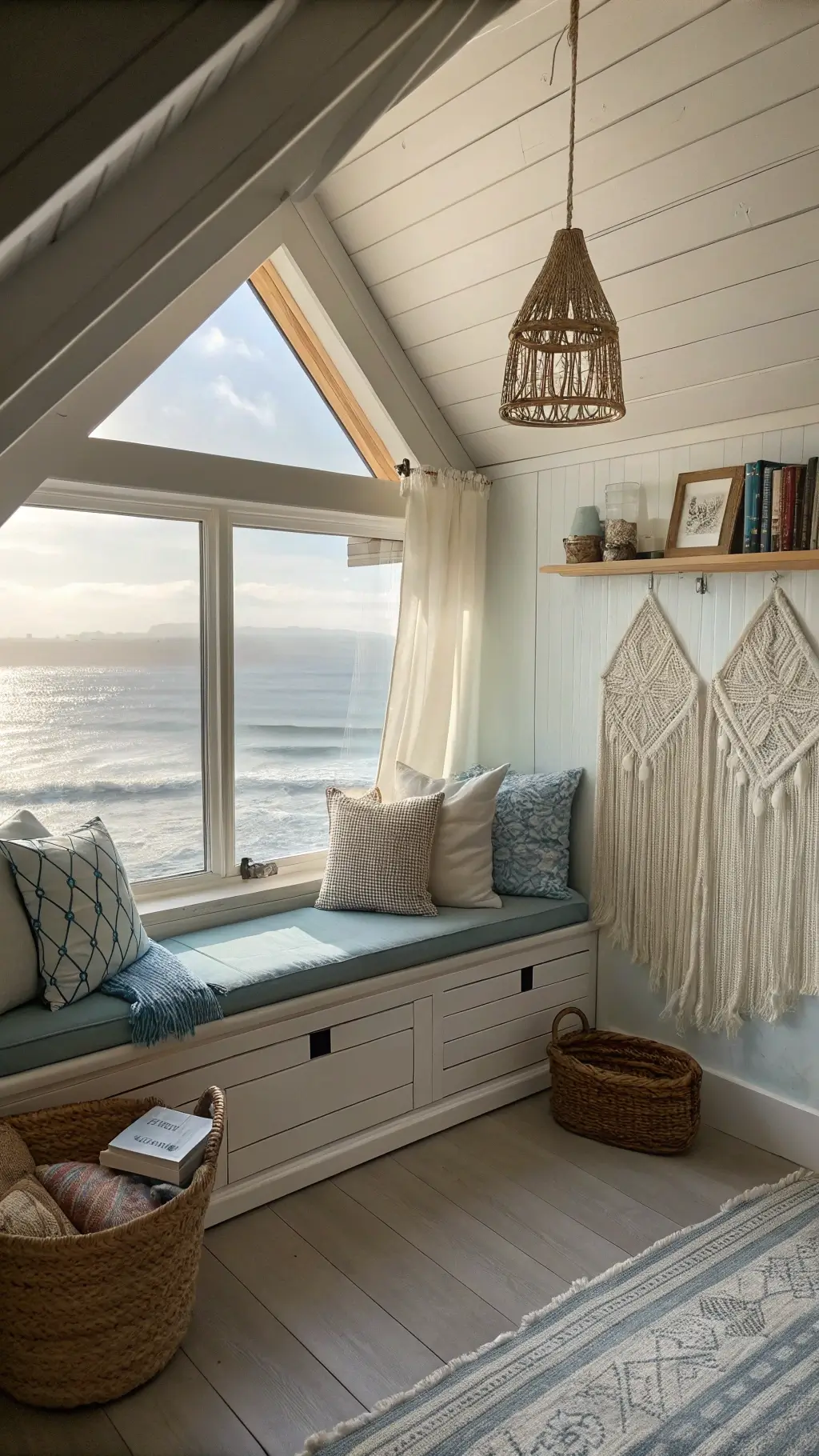
🌟 Steal This Look
- Paint Color: Farrow & Ball Shadow White 282
- Furniture: Low-profile platform bed with integrated storage drawers, built-in window seat with hinged lid for hidden storage, custom knee-wall cabinetry following roofline pitch
- Lighting: Recessed can lights with adjustable gimbals for angled ceilings, wall-mounted swing-arm reading sconces, skylight with integrated blackout shade
- Materials: Whitewashed pine plank ceilings, natural linen upholstery, matte black iron hardware, chunky wool throws, exposed beam detailing
There’s something deeply comforting about surrendering to an attic’s quirks—once you stop apologizing for the sloped ceiling and start treating it like architectural character, the room becomes a refuge rather than a compromise.
The Non-Negotiable Stuff You Need
The Big Players
Bed placement is everything. Position it under a slope or dormer window for a cocoon effect.
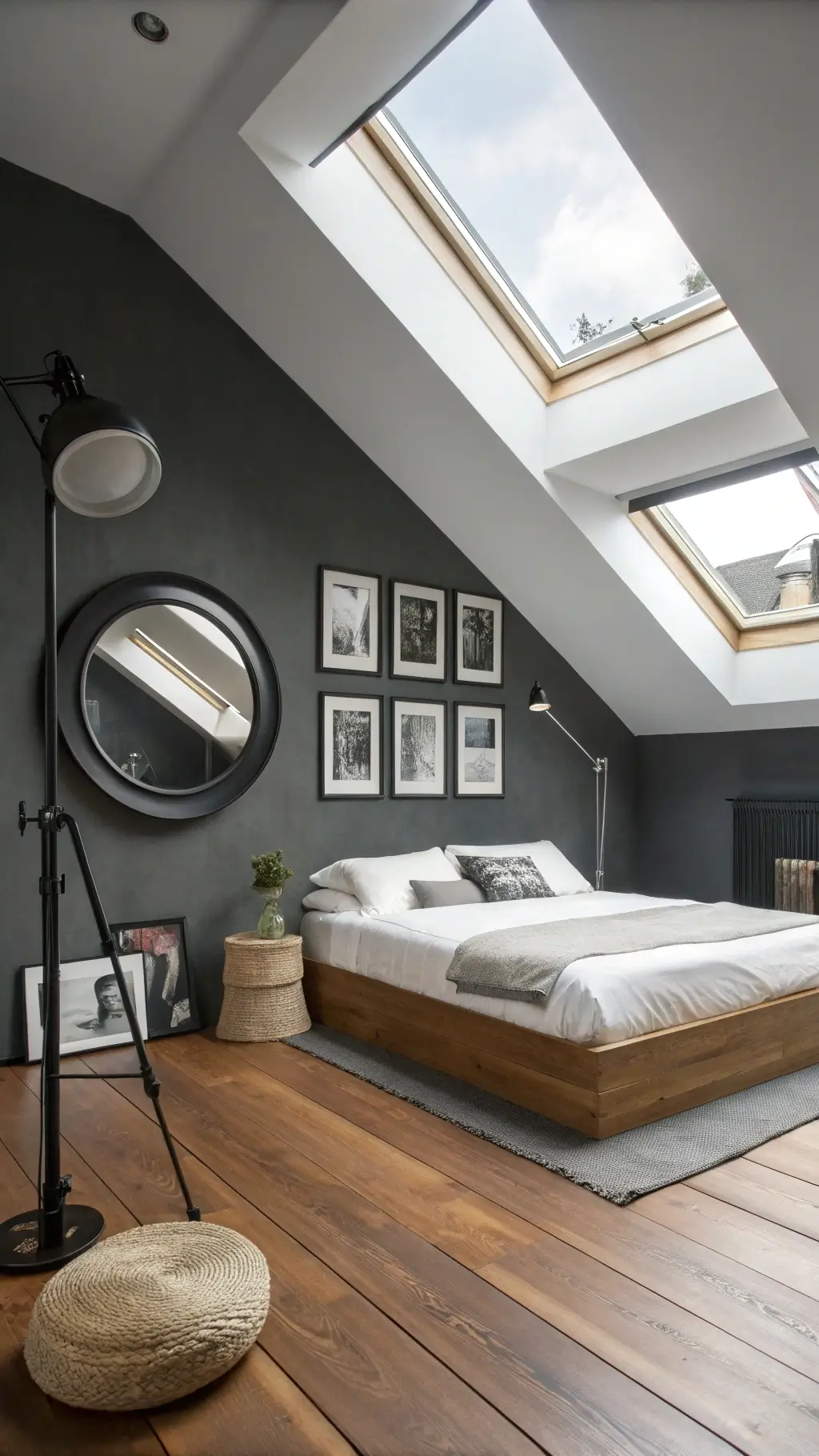
Built-in storage = vertical space savior. Use floating shelves or custom cabinetry.
One statement furniture piece to anchor the whole space.
The Supporting Cast
Textiles add warmth—chunky blankets, pillows, plush rugs make a huge difference.
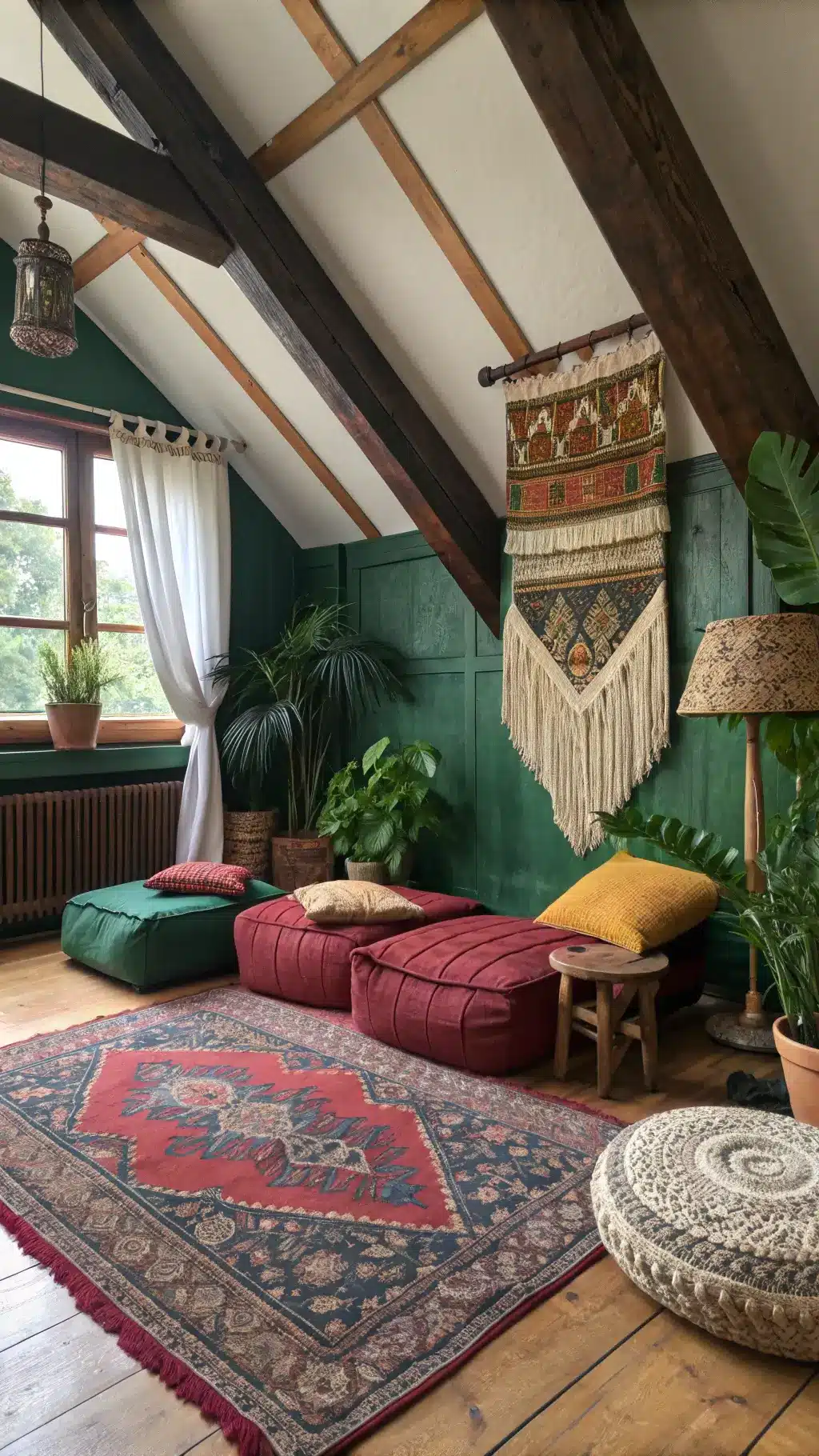
Mirrors bounce light and open up the space.
Gallery walls near light sources become stunning focal points.
★ Steal This Look
- Paint Color: Behr Polar Bear 75
- Furniture: Low-profile platform bed with built-in drawers, floating walnut nightstands, compact reading nook chair with ottoman
- Lighting: Adjustable wall-mounted sconces flanking the bed, flush-mount ceiling fixture with warm dimmable LEDs
- Materials: Reclaimed wood shelving, linen bedding, wool-blend area rug, brushed brass hardware, matte ceramic table lamps
There’s something deeply comforting about waking up under a dormer window with morning light filtering in—lean into that cocoon instinct rather than forcing conventional bedroom layouts.
Lighting: The Thing That Makes or Breaks Everything
Lighting is absolutely critical in attics because they rarely have enough windows.
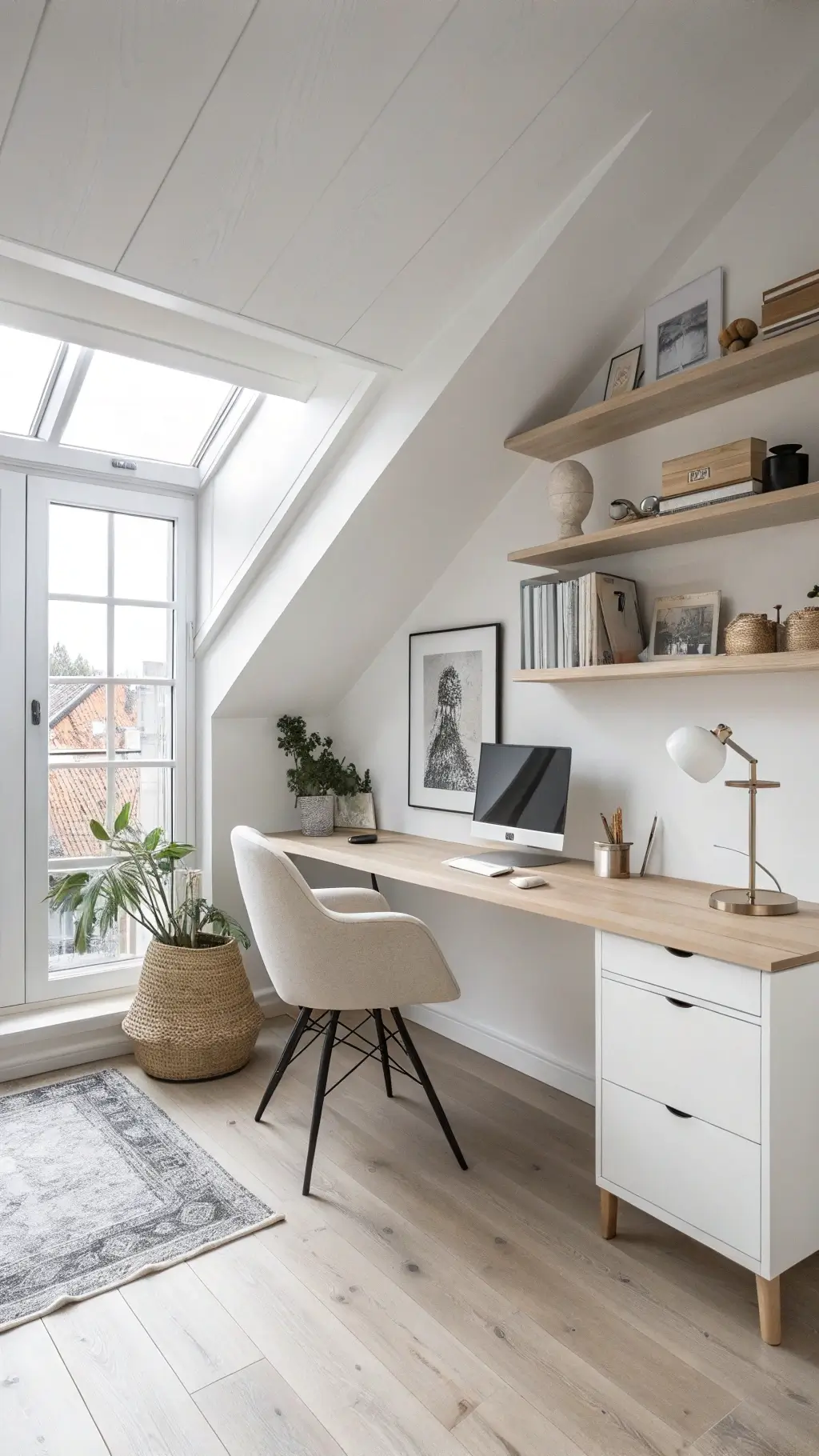
- Ambient lighting – general illumination
- Task lighting – focused for reading or work
- Mood lighting – fairy lights, LED strips for ambiance
Color temperature matters—stick to 3000K–4000K for a cozy glow.
🖼 Steal This Look
- Paint Color: Valspar Crushed Out 7002-16
- Furniture: low-profile platform bed with built-in storage drawers, slim console table for under-eave spaces
- Lighting: recessed can lights for sloped ceilings, adjustable track lighting, plug-in wall sconces with swing arms
- Materials: matte black metal fixtures, warm wood tones, linen shades, copper LED strip housings
I learned this the hard way in my own attic bedroom—one harsh flush-mount made the sloped ceiling feel like it was pressing down until I added wall sconces and LED strips along the ridge beam; suddenly the architecture became the feature, not the flaw.
Working With Weird Spaces (Instead of Against Them)
Turn sloped ceilings into reading nooks with cushions and shelves.
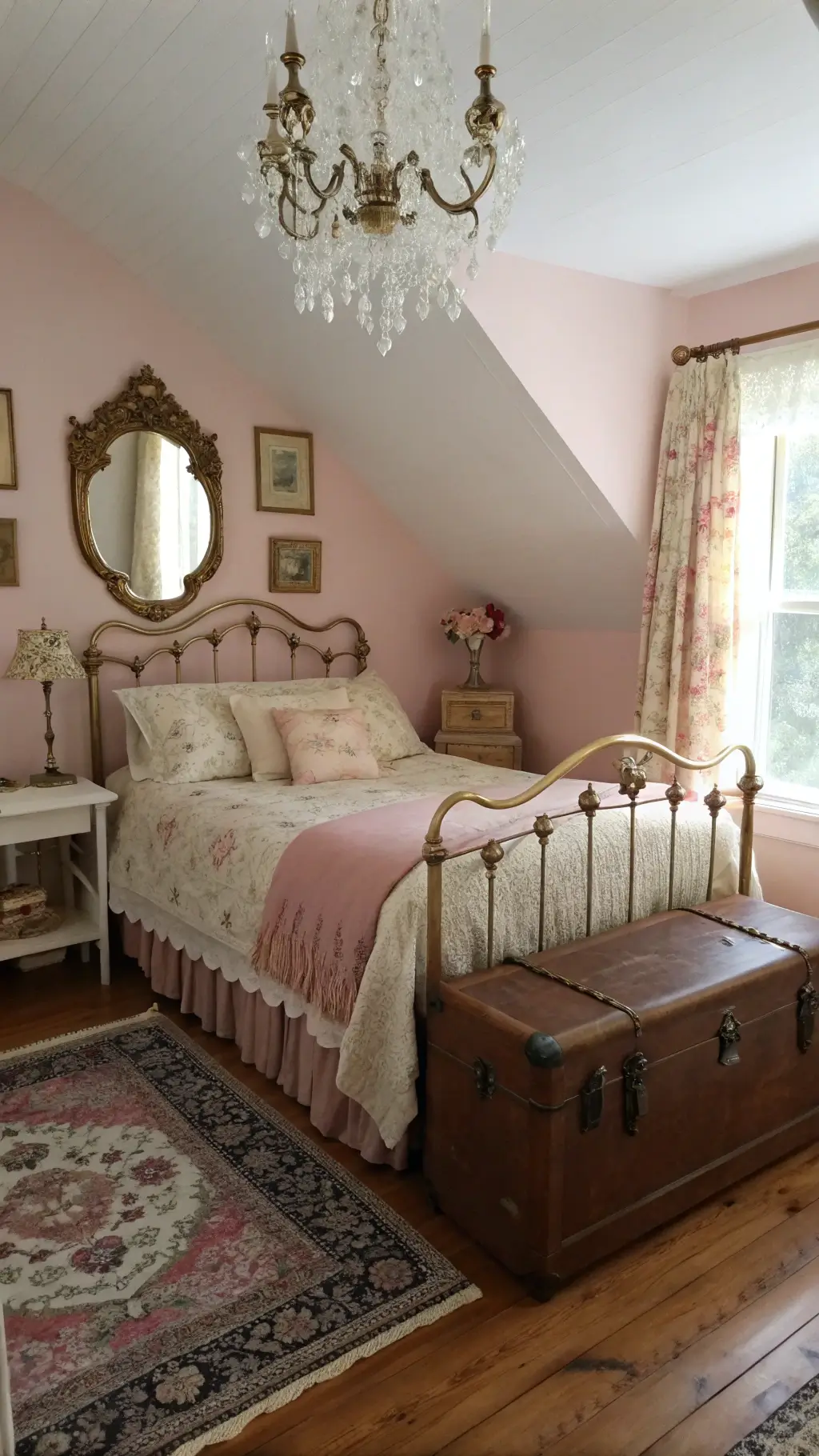
Use low corners for storage with baskets and rolling bins.
Embrace the beams—wrap them in lights or leave them raw for added character.
✎ Steal This Look
- Paint Color: PPG Gypsum PPG1006-1
- Furniture: low-profile floor cushions with removable covers, built-in banquette seating with hidden storage, rolling under-eave storage bins
- Lighting: warm white LED string lights wrapped around exposed beams, adjustable clip-on reading lights for sloped ceiling nooks
- Materials: unfinished or lightly stained pine beams, natural woven seagrass baskets, linen-blend cushion covers, matte black metal rolling bin frames
There’s something deeply satisfying about transforming an awkward knee wall into your favorite spot in the house—I’ve seen homeowners weep when they realize their ‘unusable’ attic eave became the reading nook their kids actually fight over.
Putting It All Together (My Actual Process)
Step 1: Clear Everything Out
Measure usable zones and assess natural light.
Step 2: Pick Your Colors
Use the 70-20-10 rule for balance and cohesion.
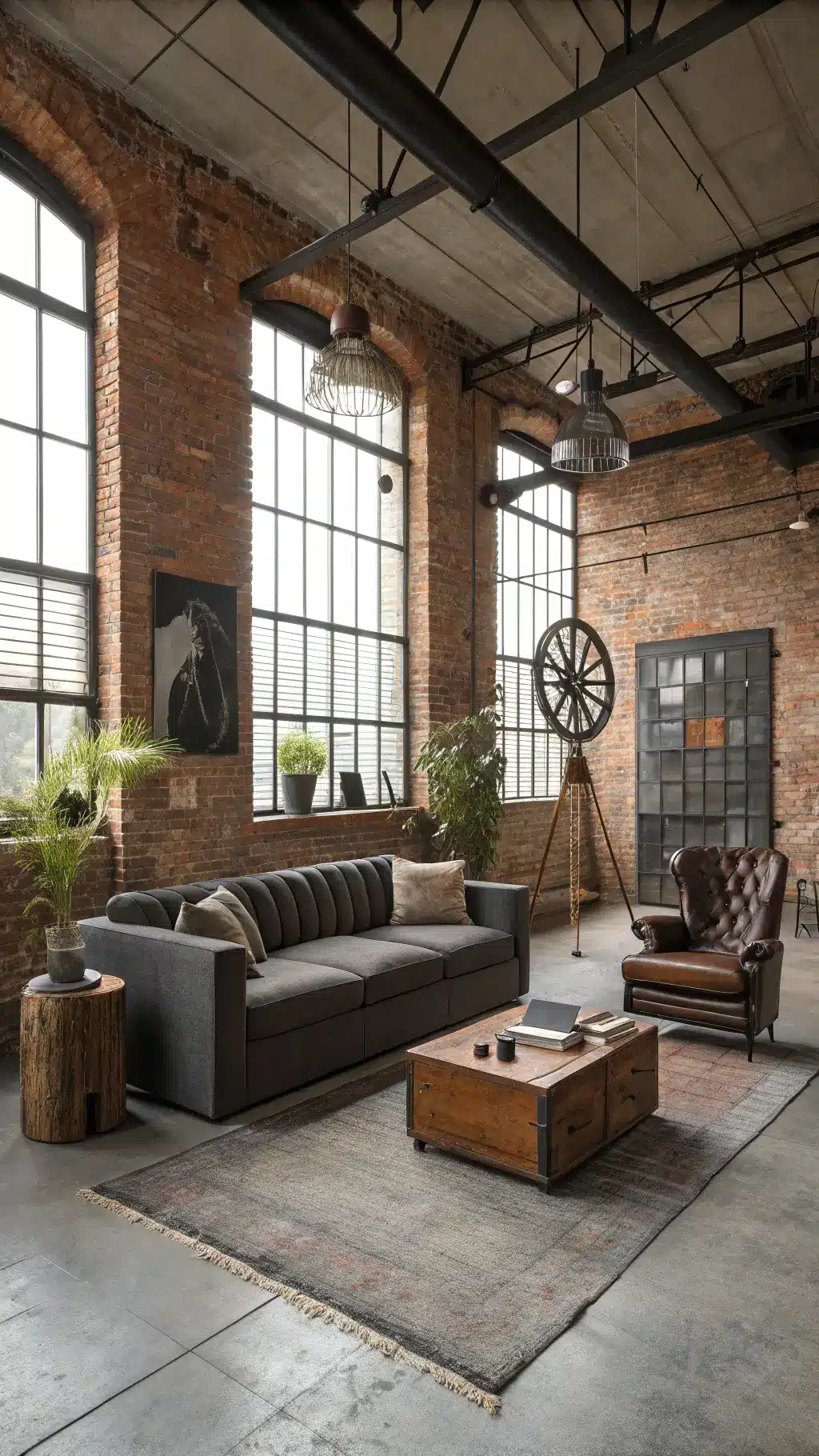
Step 3: Position Your Biggest Piece First
Start with bed, desk, or sofa—build around it.
Step 4: Add Storage
Install shelves, ottomans, and closet systems before decorating.
Step 5: Layer Lighting
Start with ambient, add task, finish with mood lighting.
Step 6: Textiles
Rugs, curtains, bedding—make it soft and cozy.
Step 7: Accessorize
Less is more. Pick bold, intentional pieces.
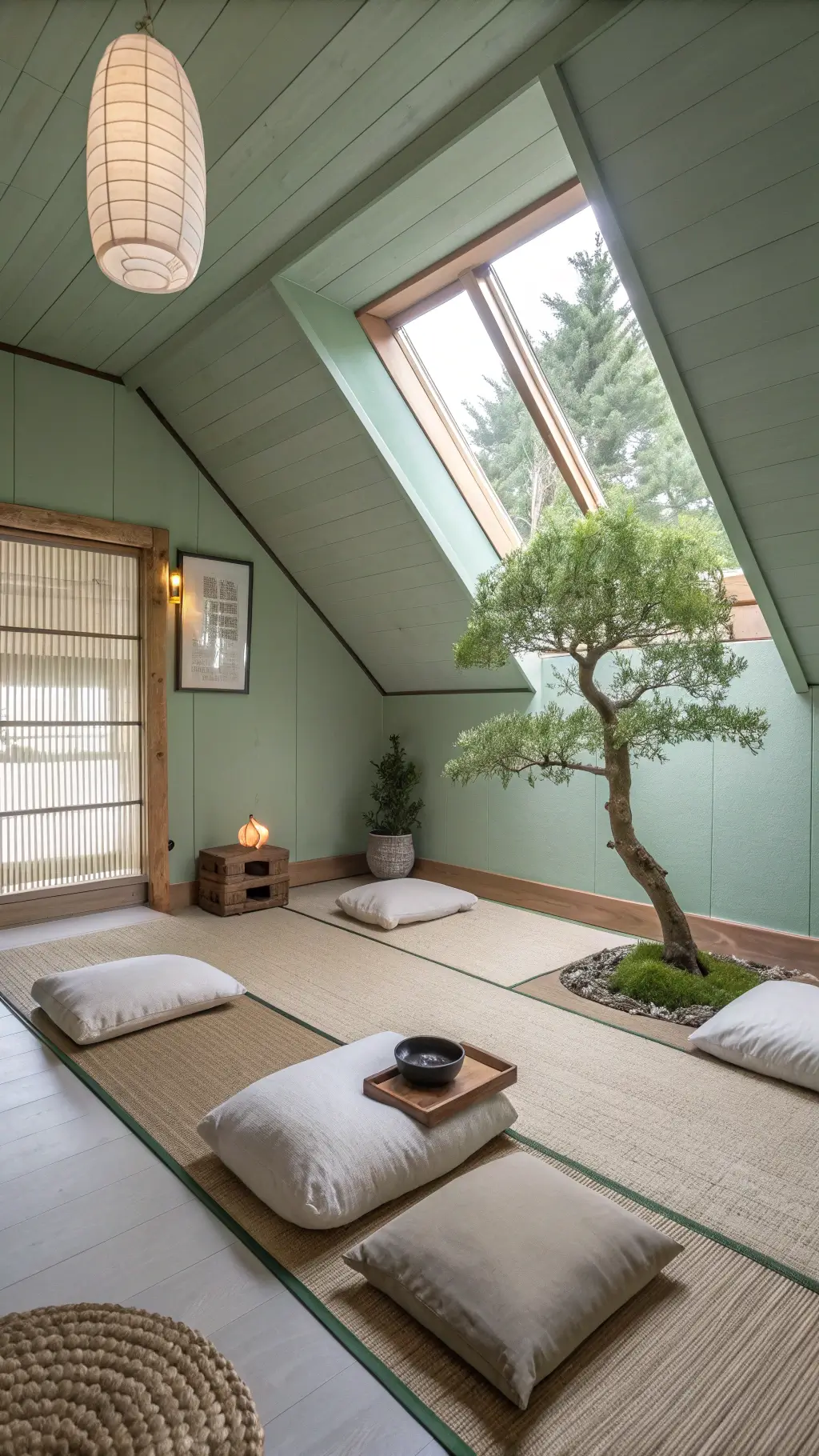
★ Steal This Look
- Paint Color: Dunn-Edwards Whisper White DEW 340
- Furniture: Low-profile platform bed with integrated storage, compact writing desk with wall-mounted hutch, modular cube shelving
- Lighting: Adjustable track lighting for sloped ceilings, clip-on bed reading lights, battery-operated LED puck lights for dormers
- Materials: Light oak plywood for built-ins, natural linen textiles, matte black metal hardware, low-pile wool rugs
I’ve cleared out four attic rooms now, and each time I swear I’ll measure twice—then I still end up reconfiguring everything after that first night’s sleep. The sloped ceilings always surprise you.
Making It Feel Like Yours
Celebrate the weird architecture—it’s what makes attics special.
Mix textures for visual interest.
Create a focal point that draws attention away from awkward angles.
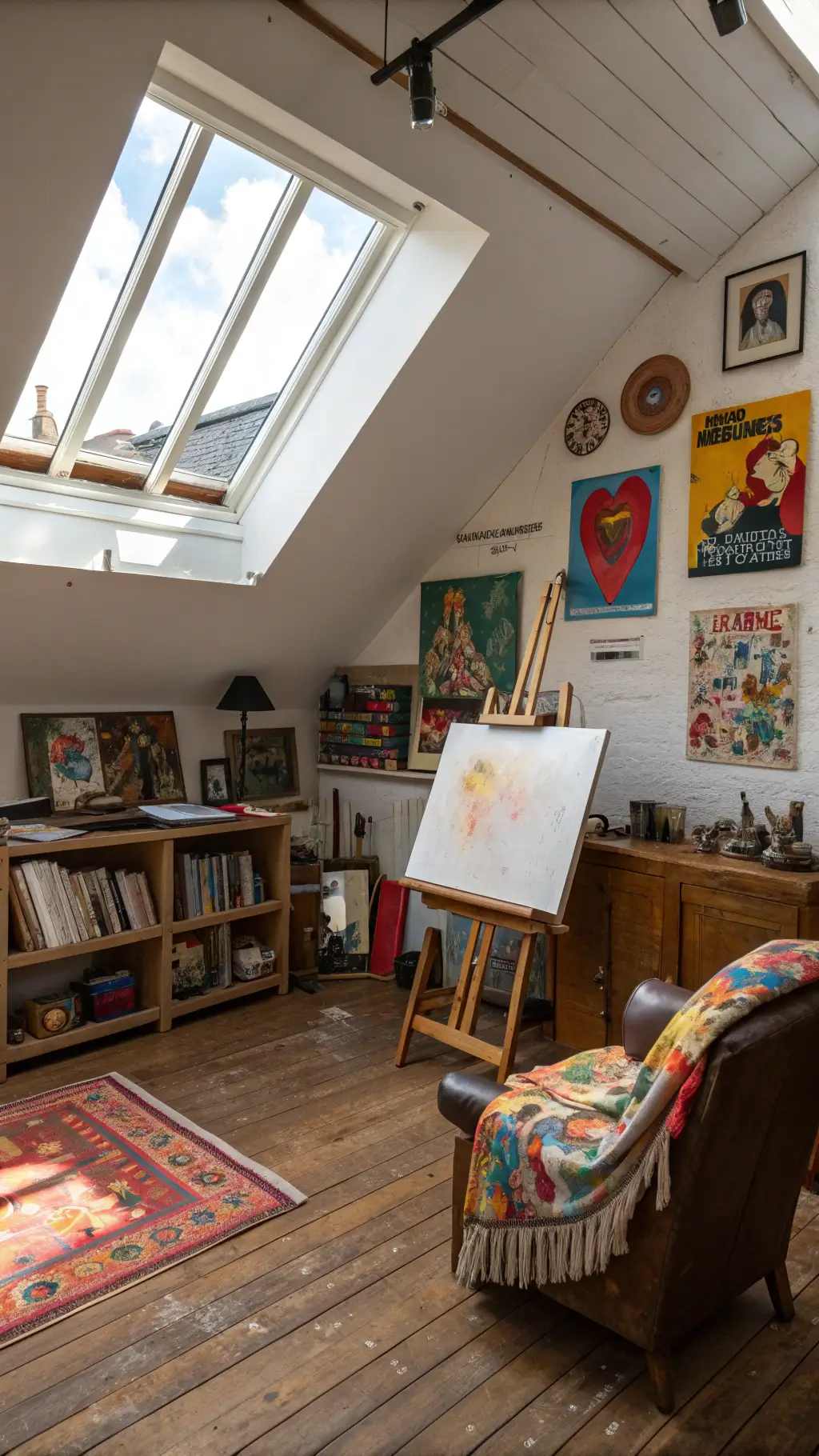
🏠 Steal This Look
- Paint Color: Clare Paint Current Mood DEPTH-06 — a deep, moody charcoal that celebrates attic shadows and makes sloped ceilings feel intentional rather than awkward
- Furniture: Low-profile platform bed with built-in storage drawers, vintage trunk as coffee table, floor cushions for flexible seating under eaves
- Lighting: Adjustable track lighting mounted to sloped ceiling, brass swing-arm wall sconces, clustered pendant lights at varying heights
- Materials: Raw exposed beams, nubby wool throws, reclaimed wood, matte black metal, linen upholstery, vintage leather
There’s something quietly rebellious about turning the quirkiest room in the house into your favorite retreat—lean into the asymmetry and let it feel collected over time rather than perfectly staged.
Keeping It Fresh Without Starting Over
Seasonal swaps like bedding and pillows make a big impact.
Budget-friendly updates: paint, rearrange furniture, change out art or lights.
Common Mistakes I Made (So You Don’t Have To)
- Trying to make it look like a regular room
- Ignoring temperature control
- Overcrowding
- Skimping on lighting
- Forgetting about stair access